JOIN THE WAITLIST











VAST
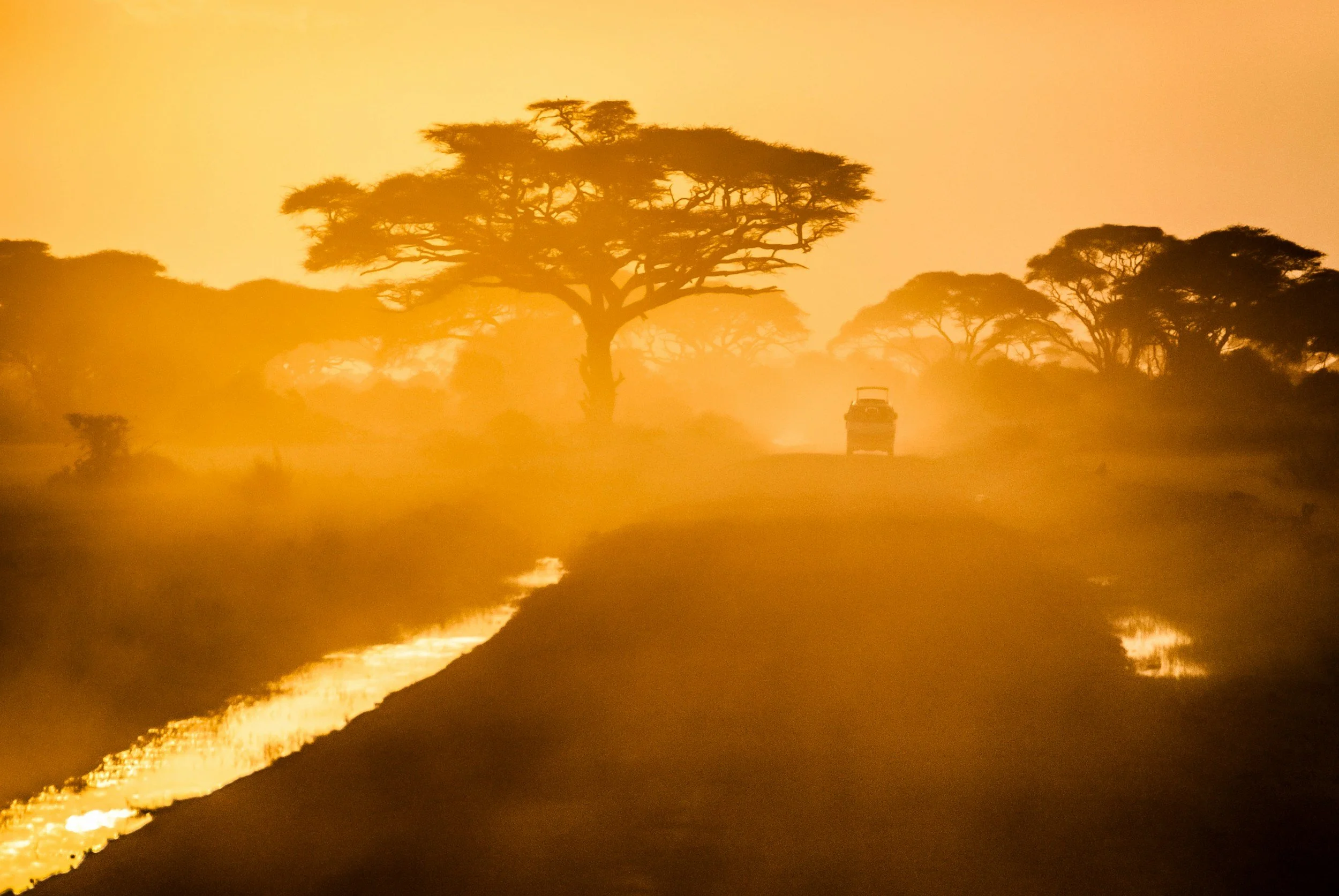
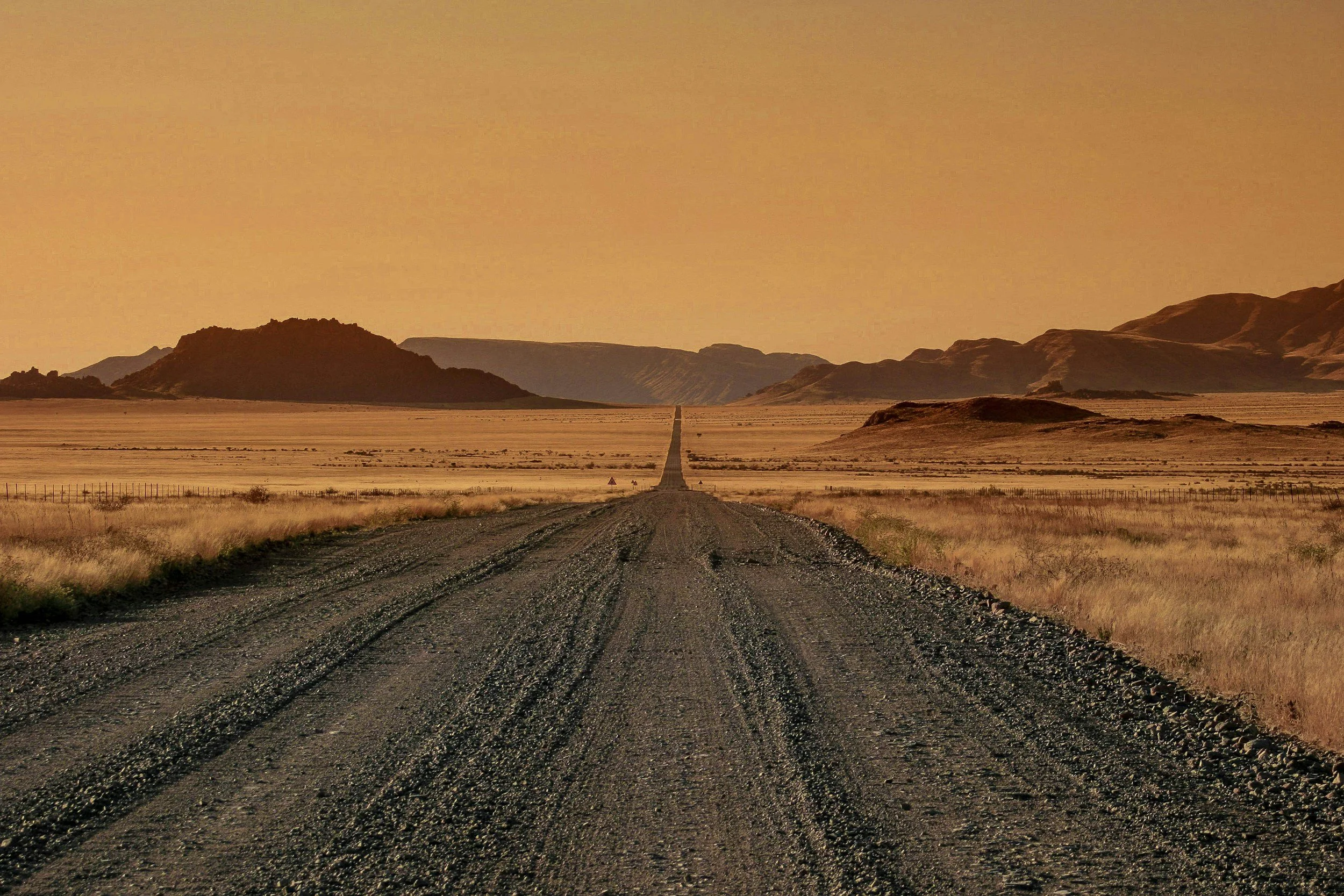
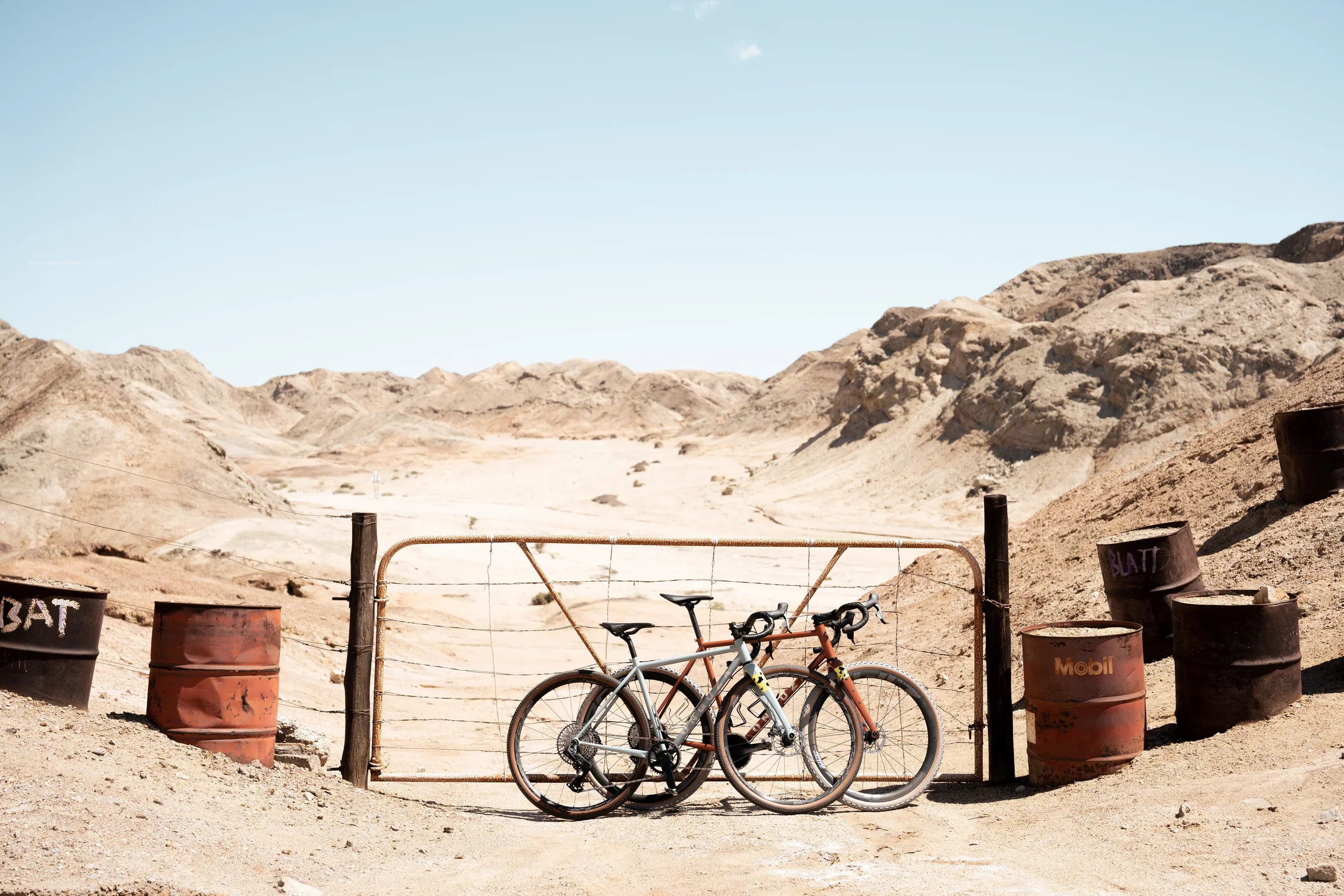
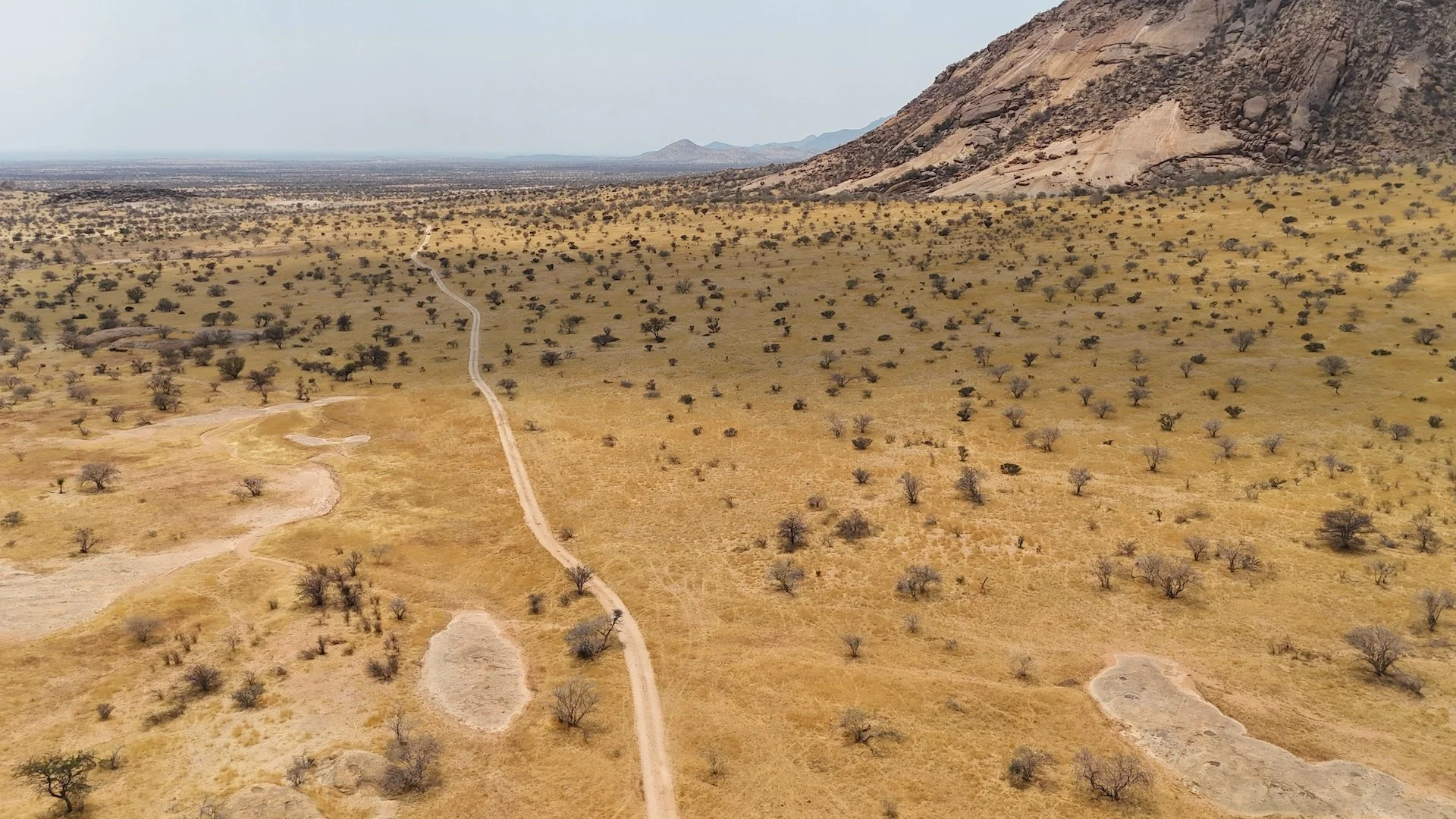
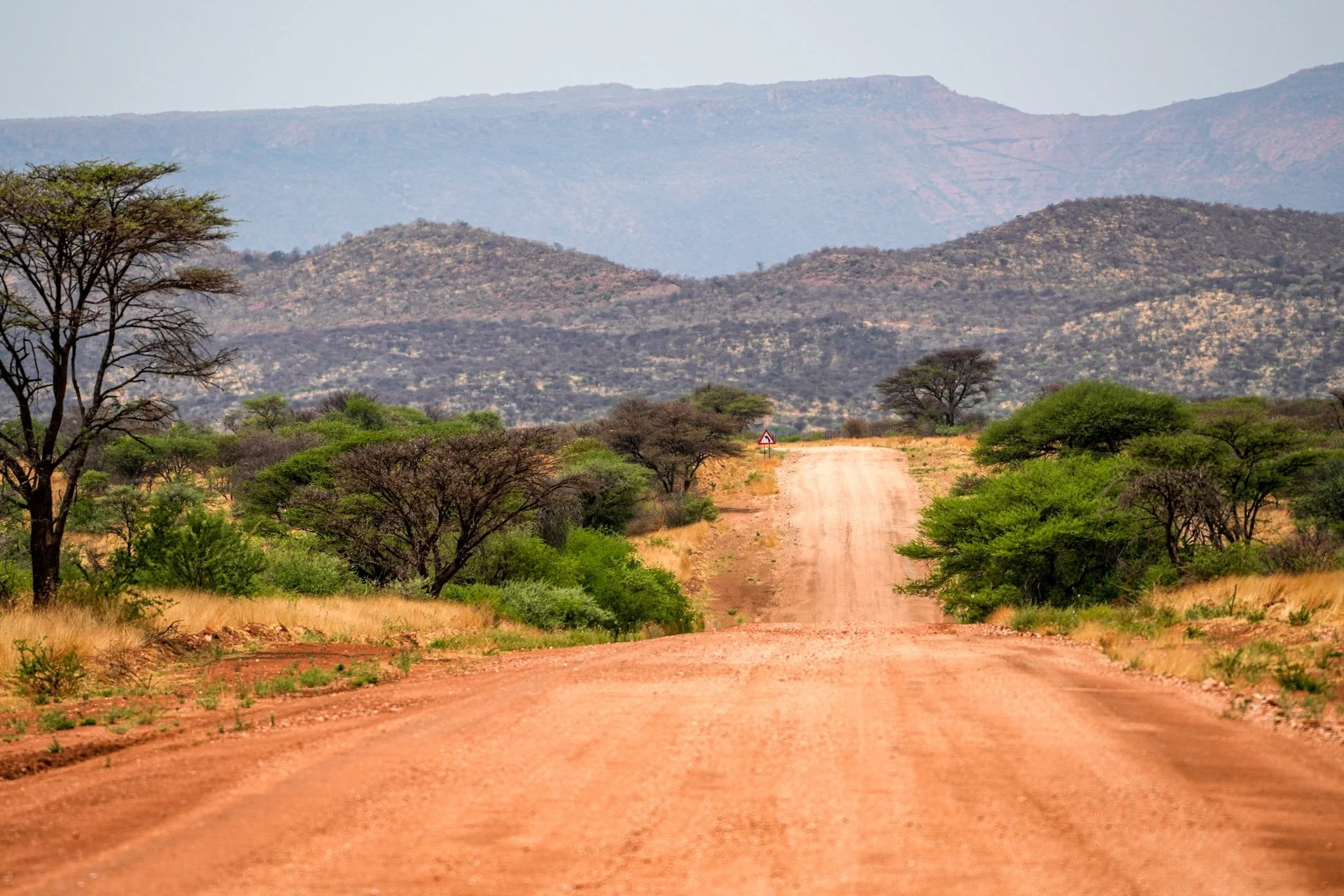
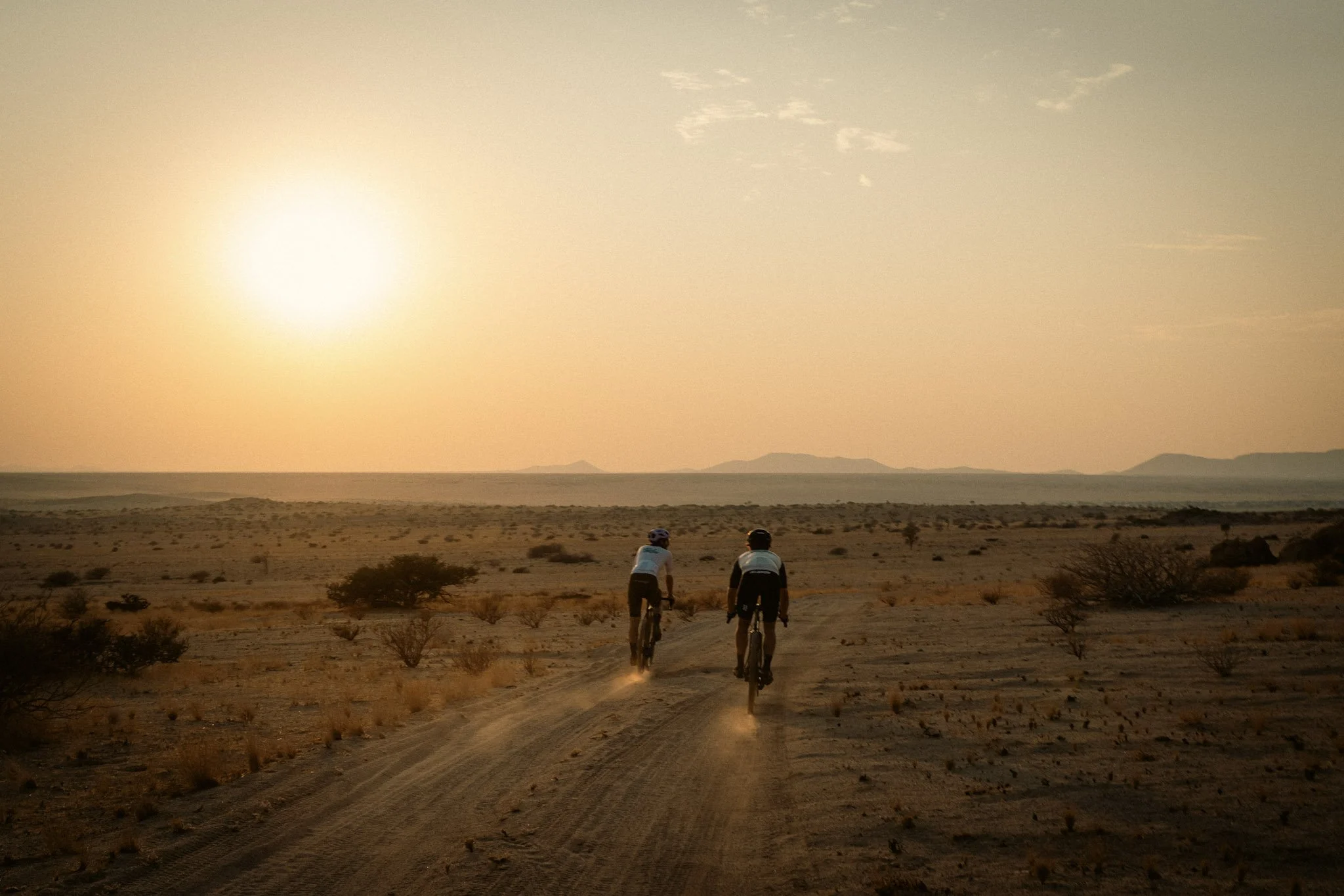
Namibia isn’t about novelty, nor is it a place to be collected. It’s about space—real space—and what happens when you move through it without distraction. Distances stretch. Noise falls away. The land asks more of you than most places, and that’s exactly the point.
This RAID + Onguza gravel journey represents the sharp end of a decade spent exploring, refining, and guiding in some of the most isolated terrain on the planet. This is travel that rewards attention and patience, not spectacle.
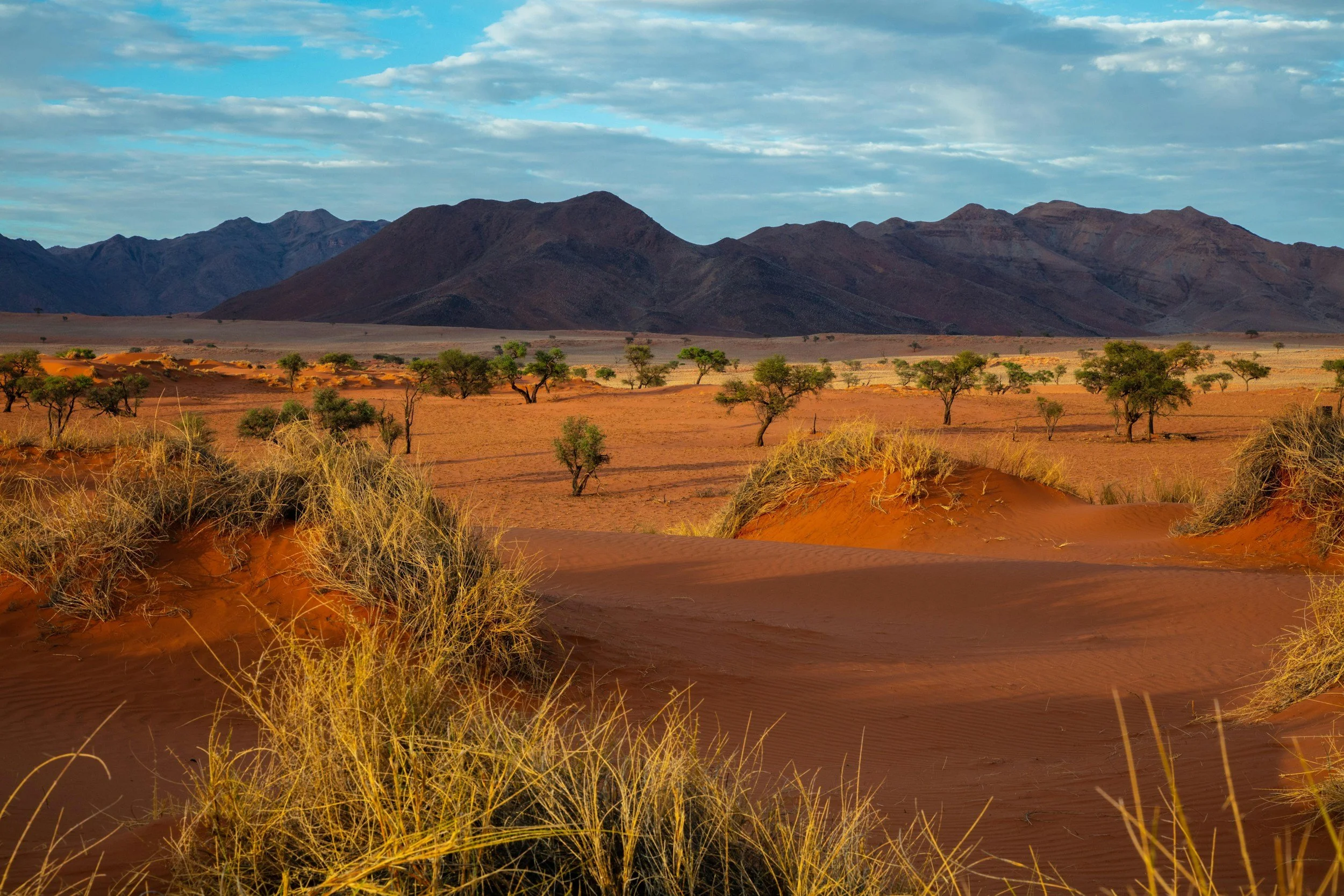
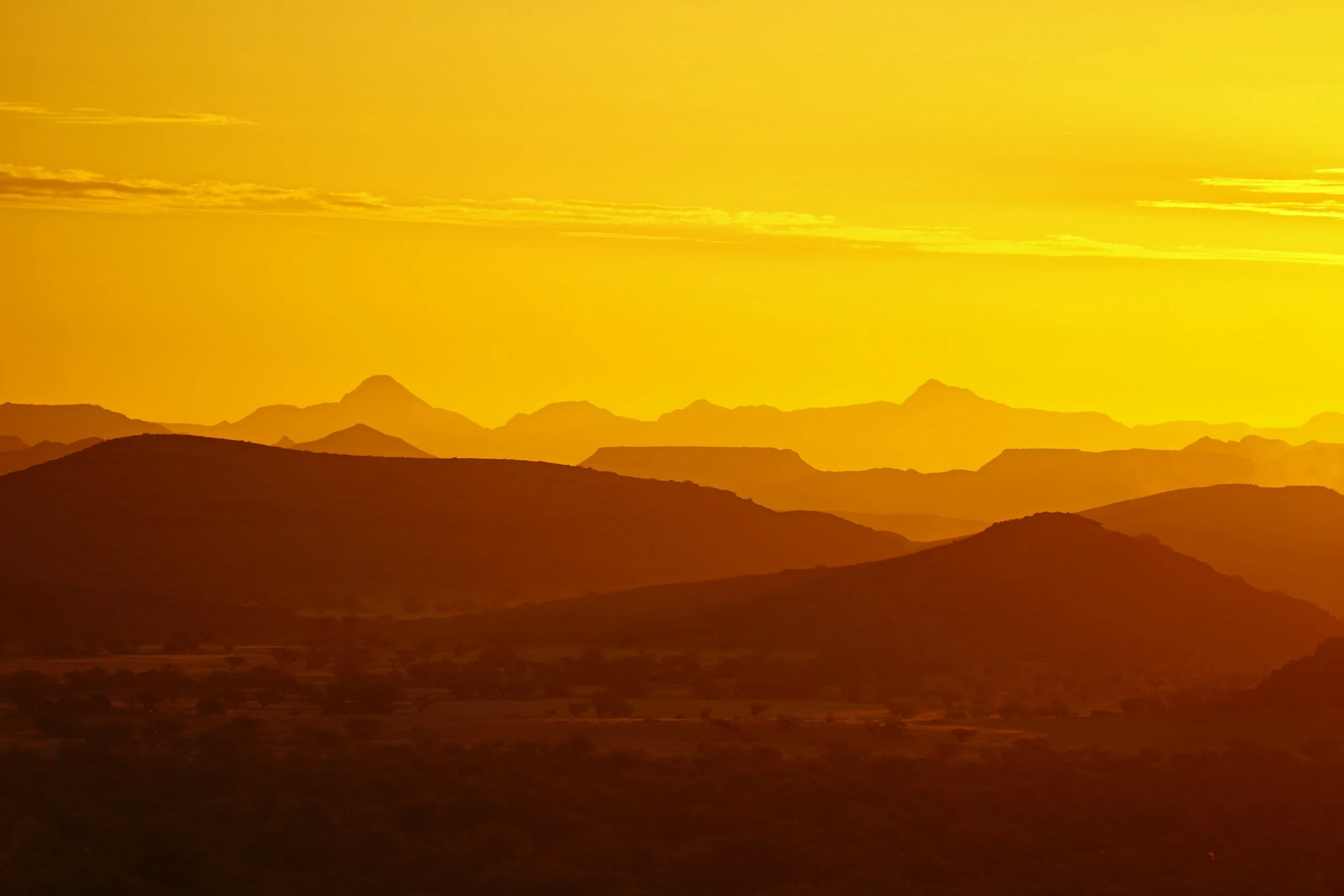
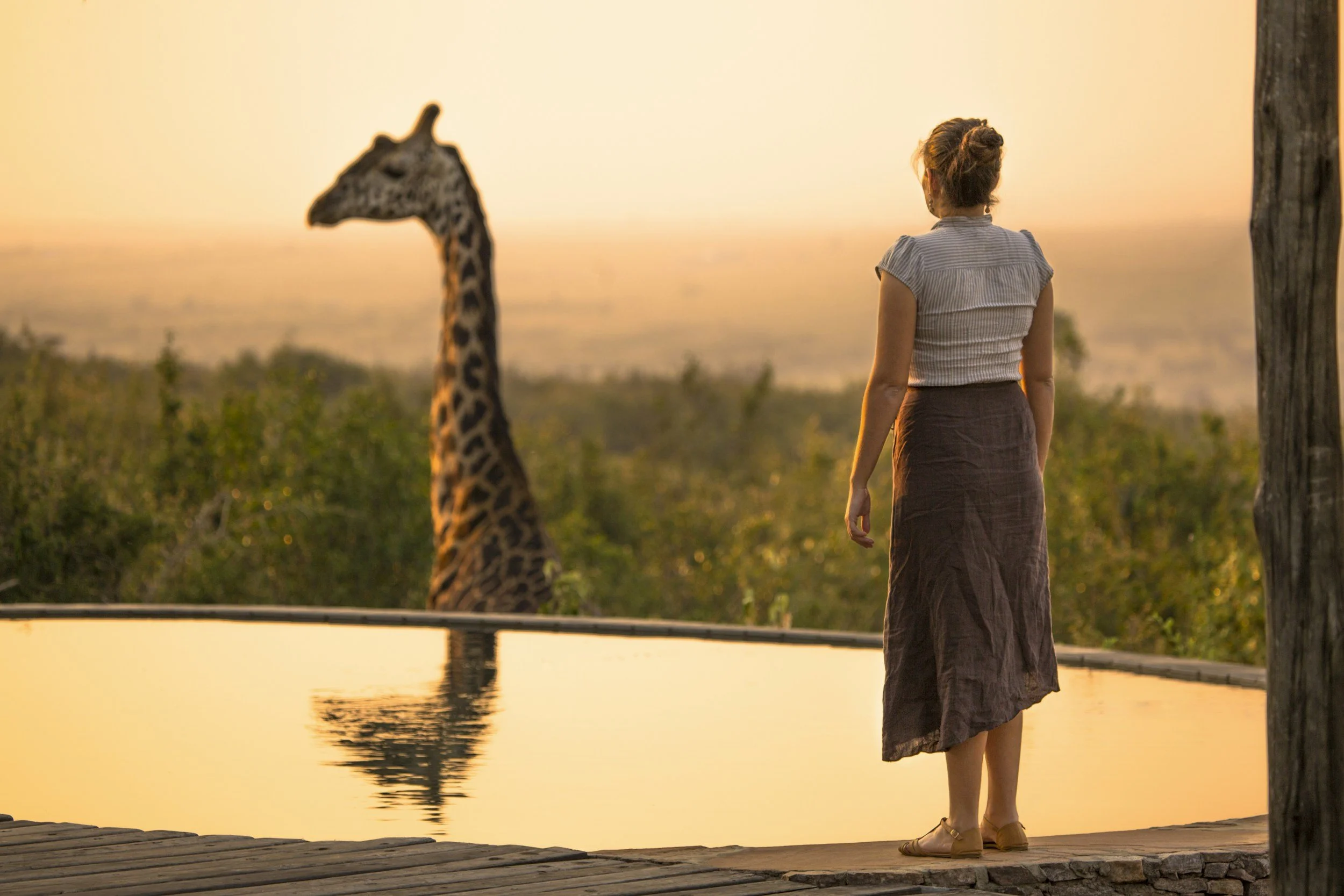
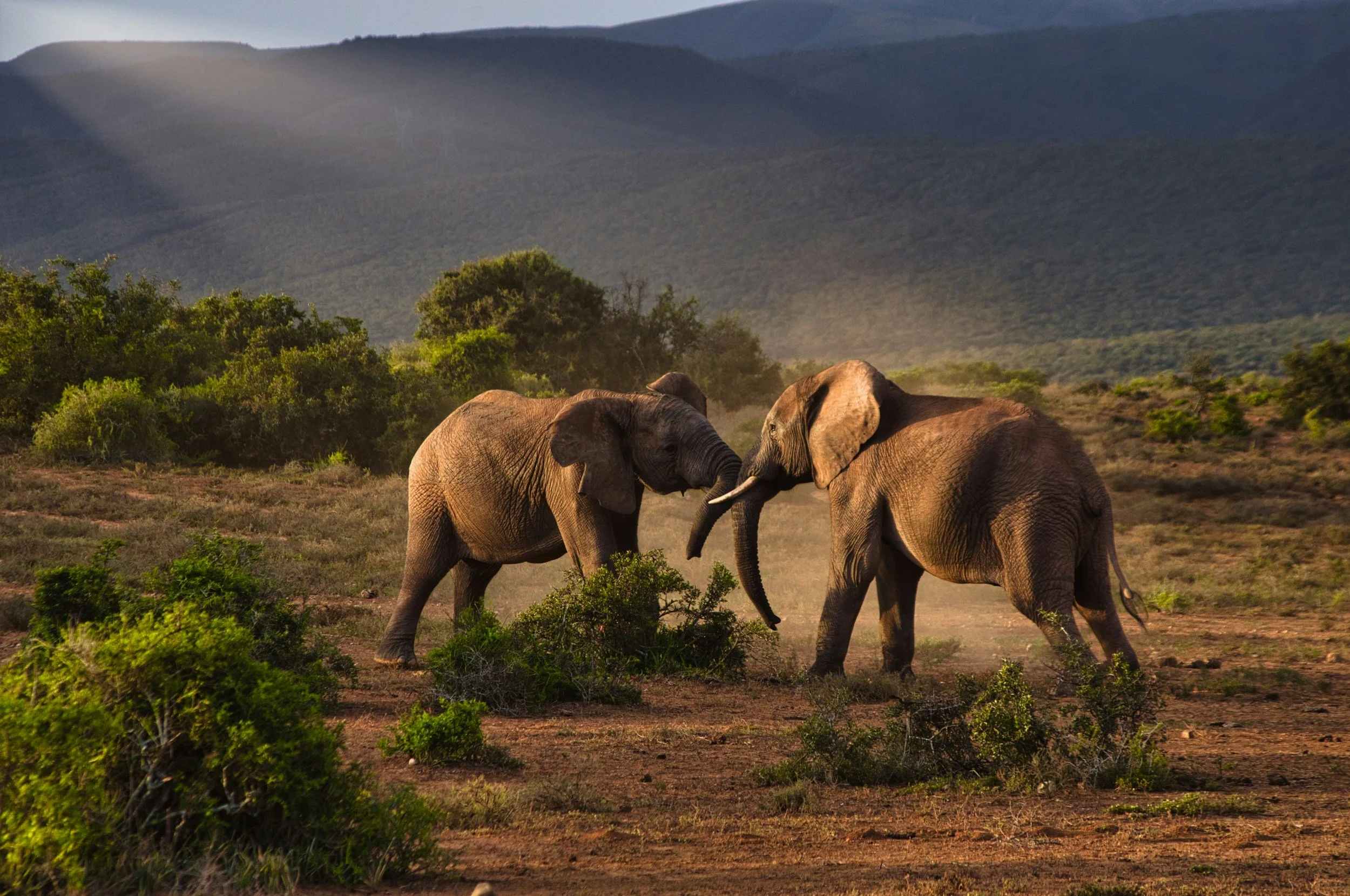
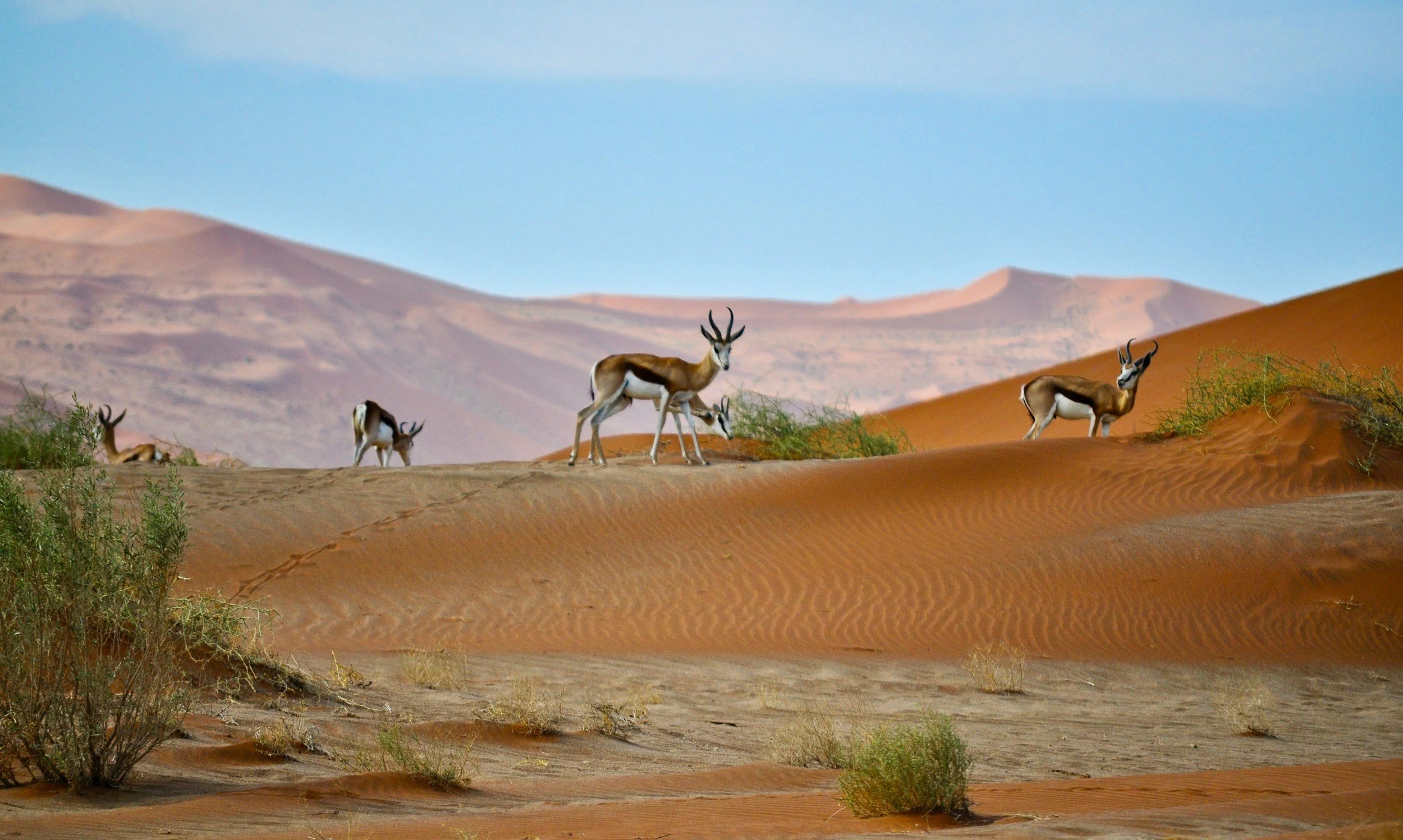
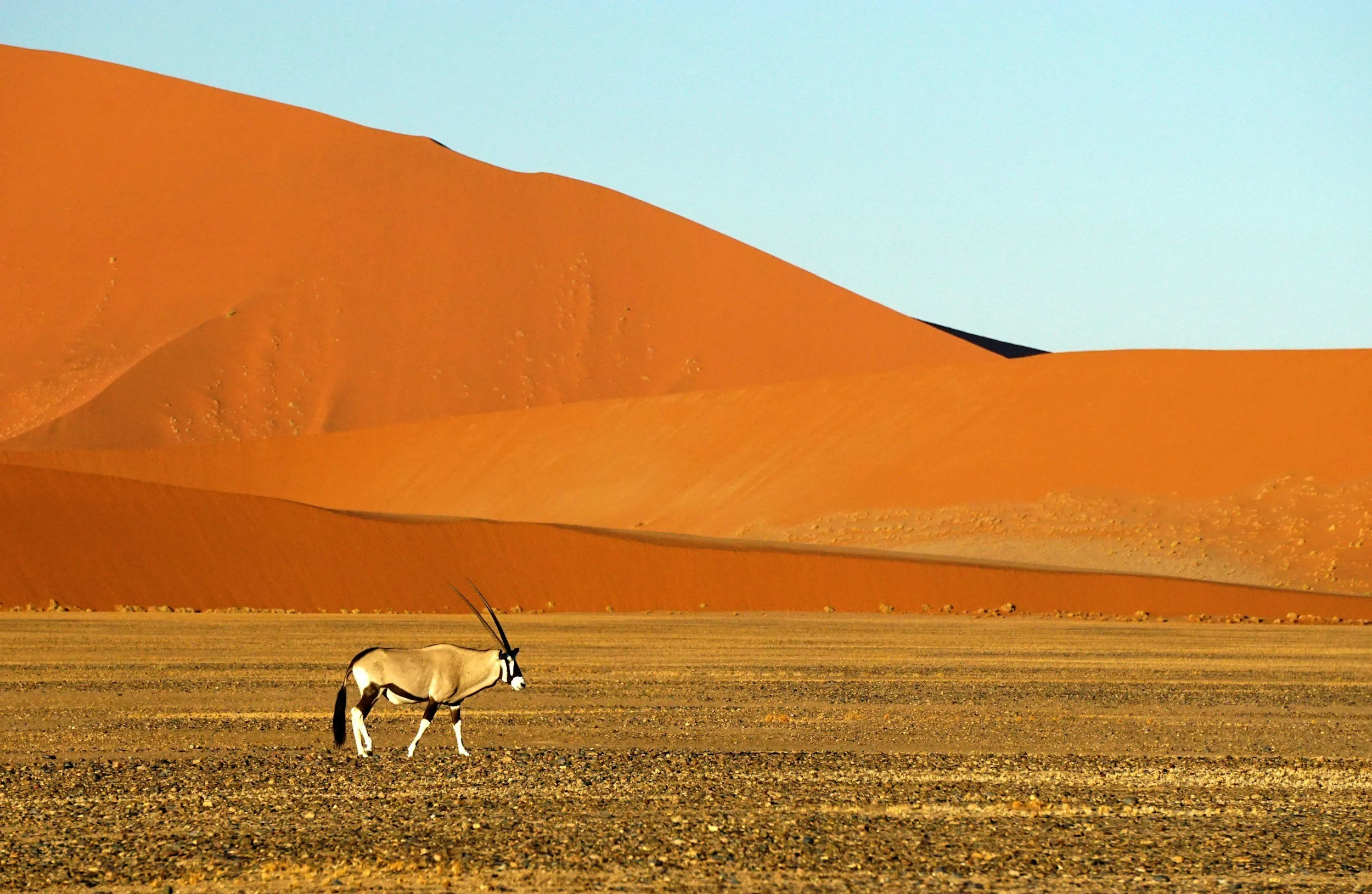
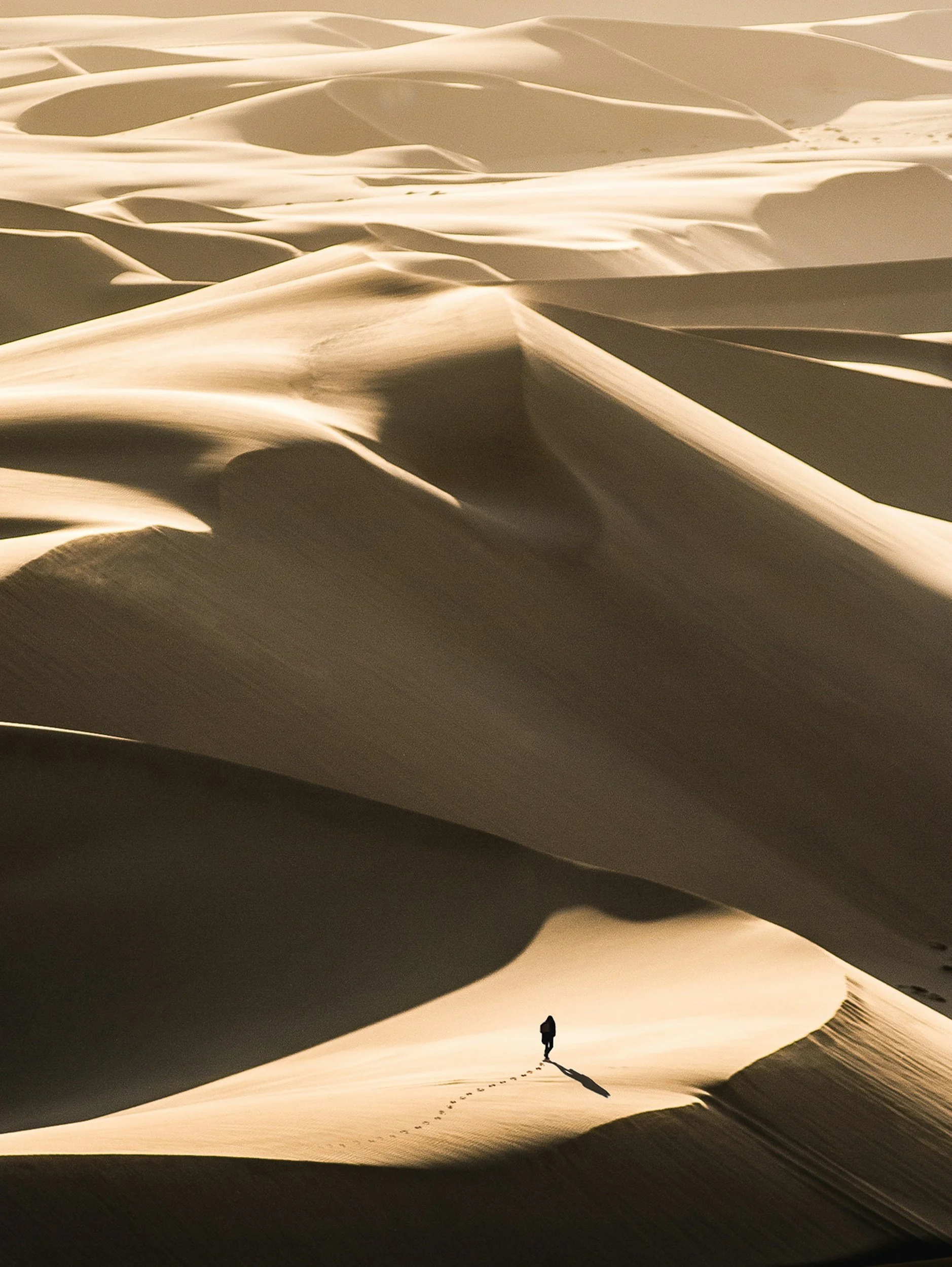
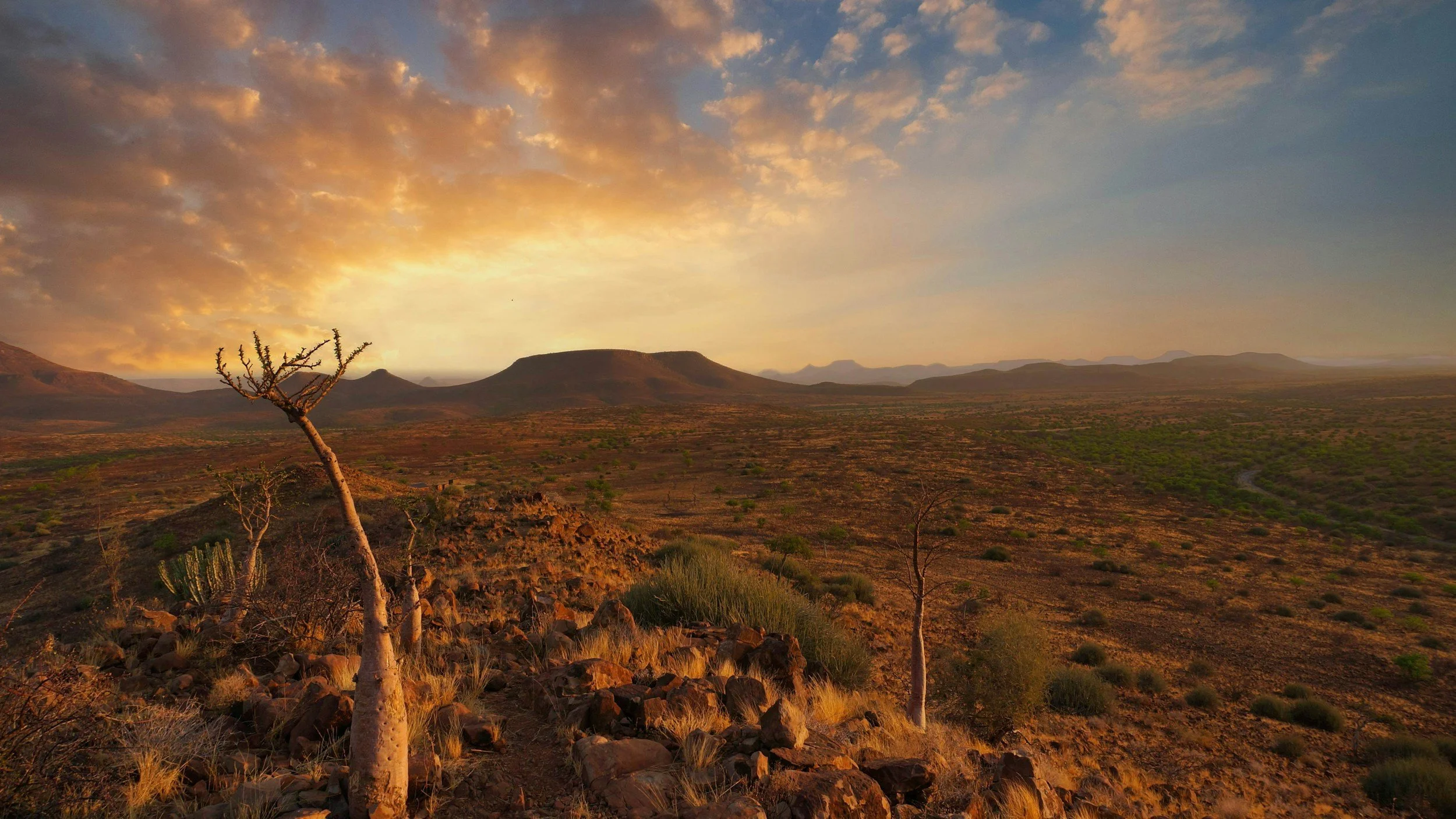
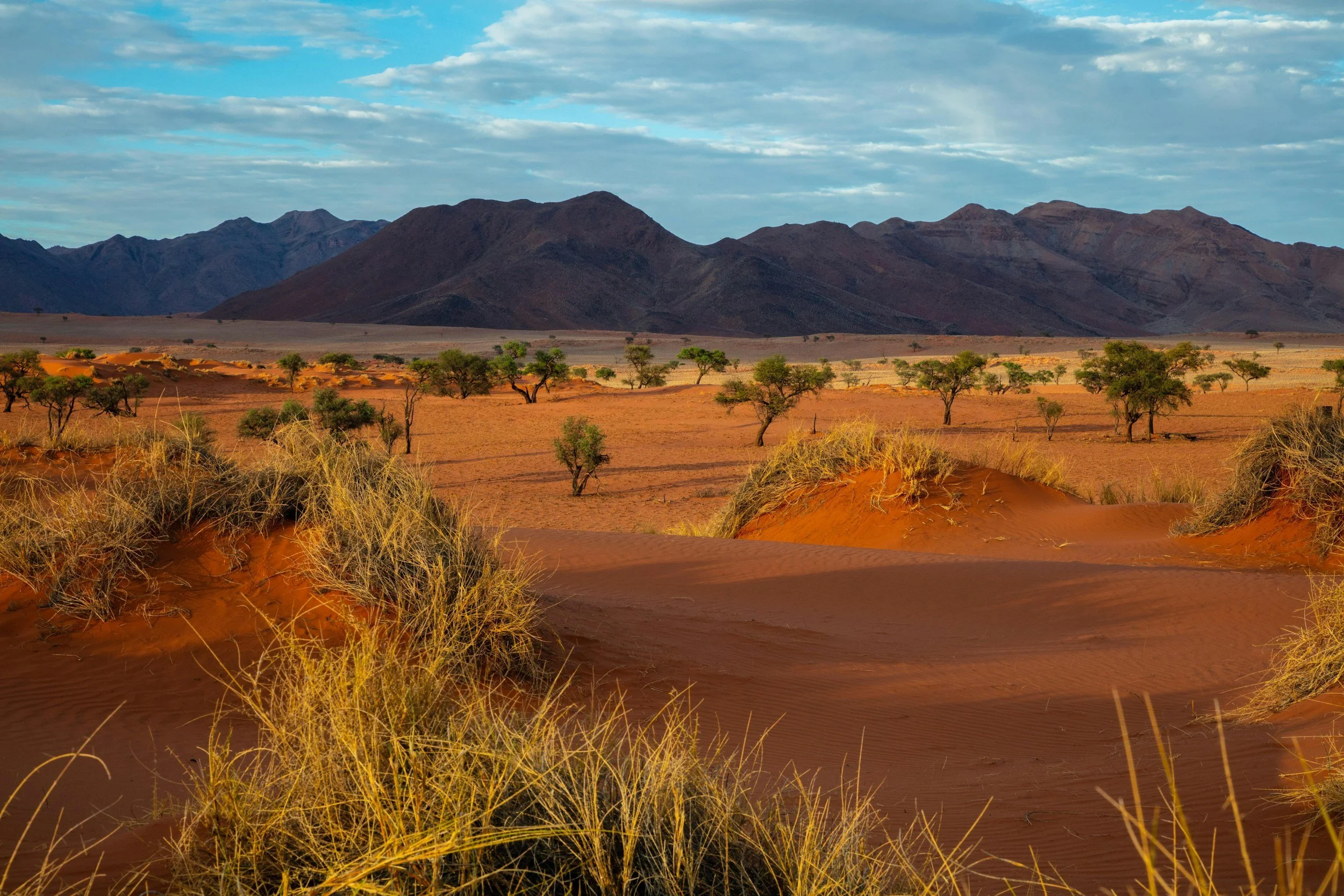
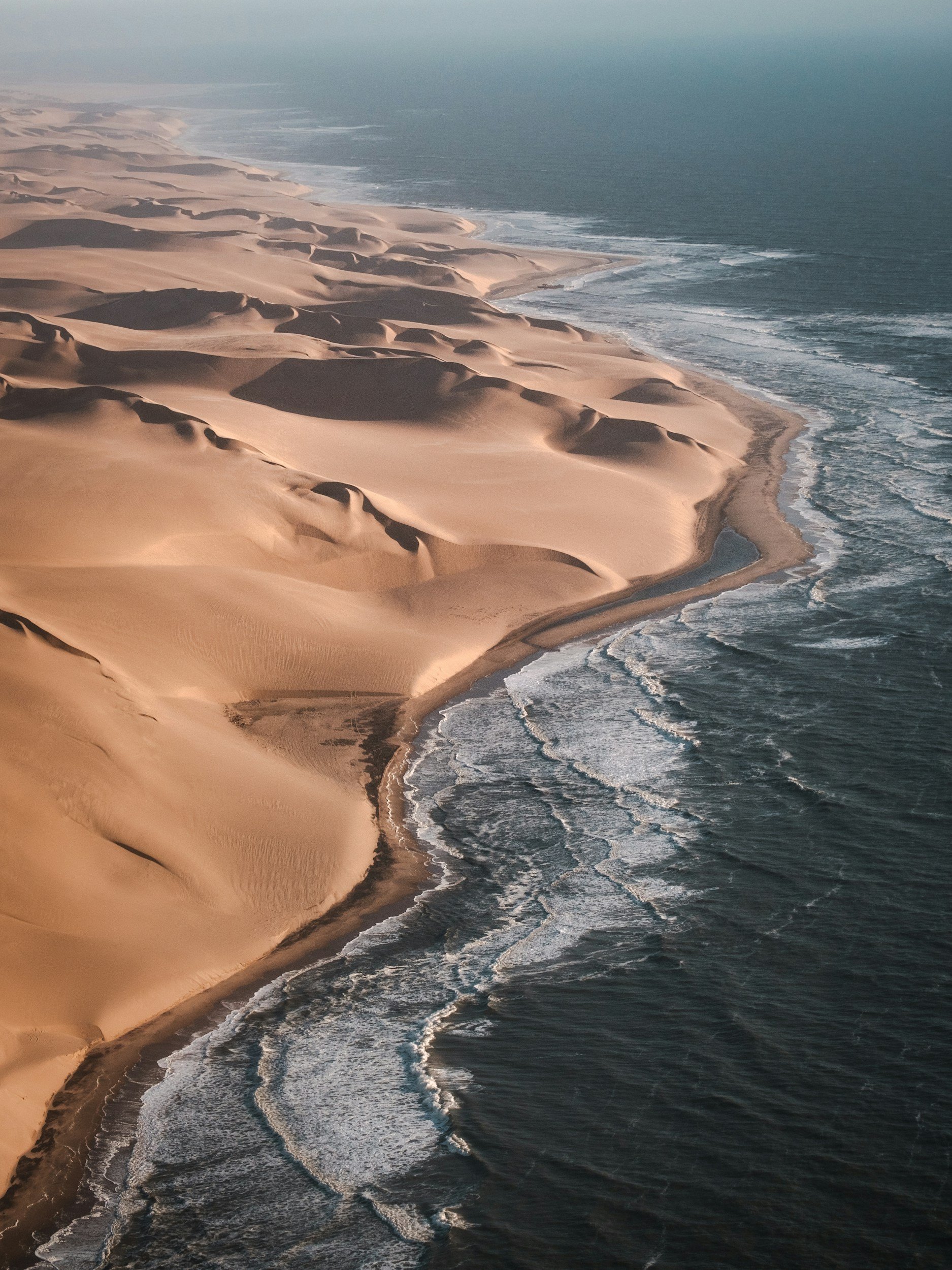
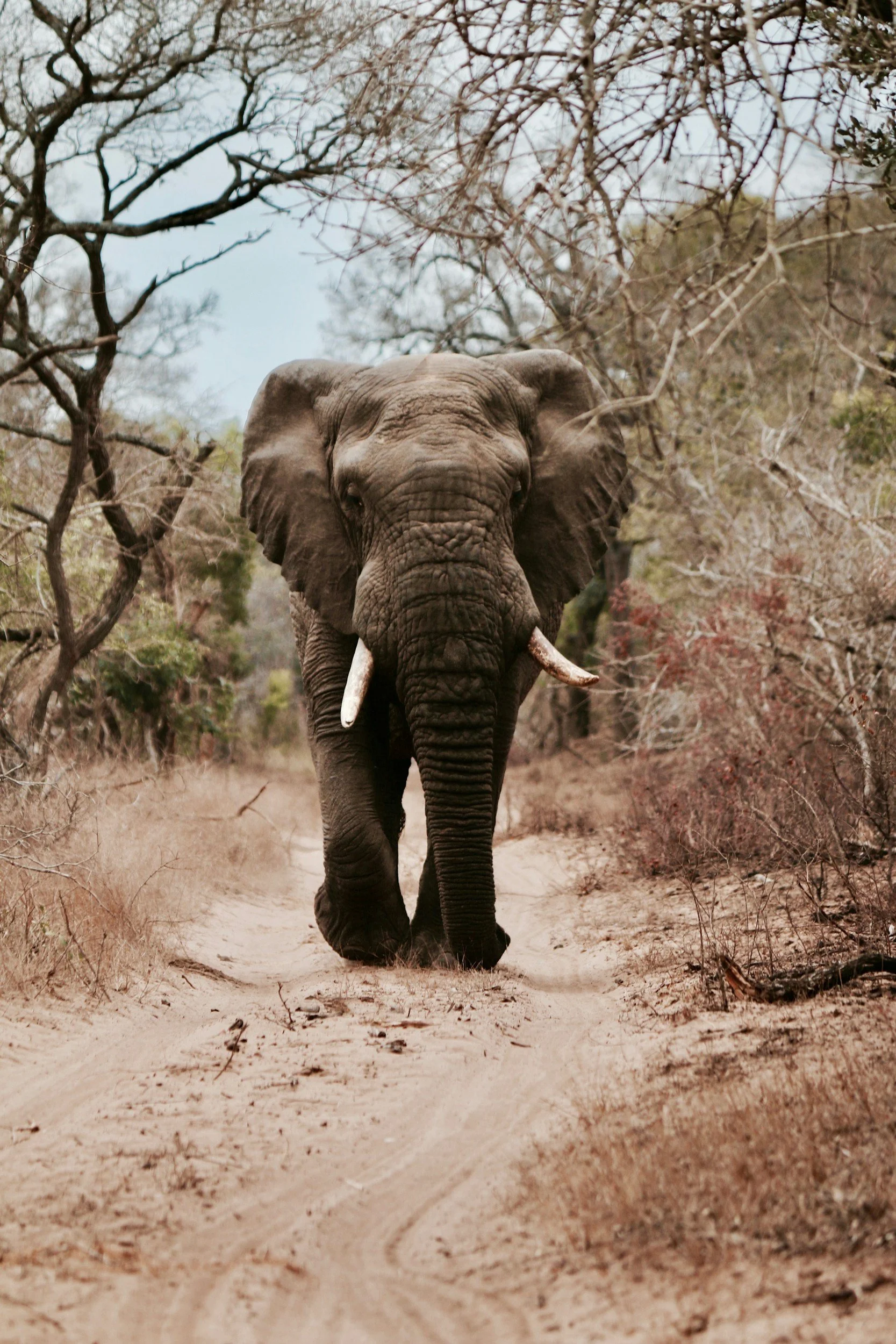
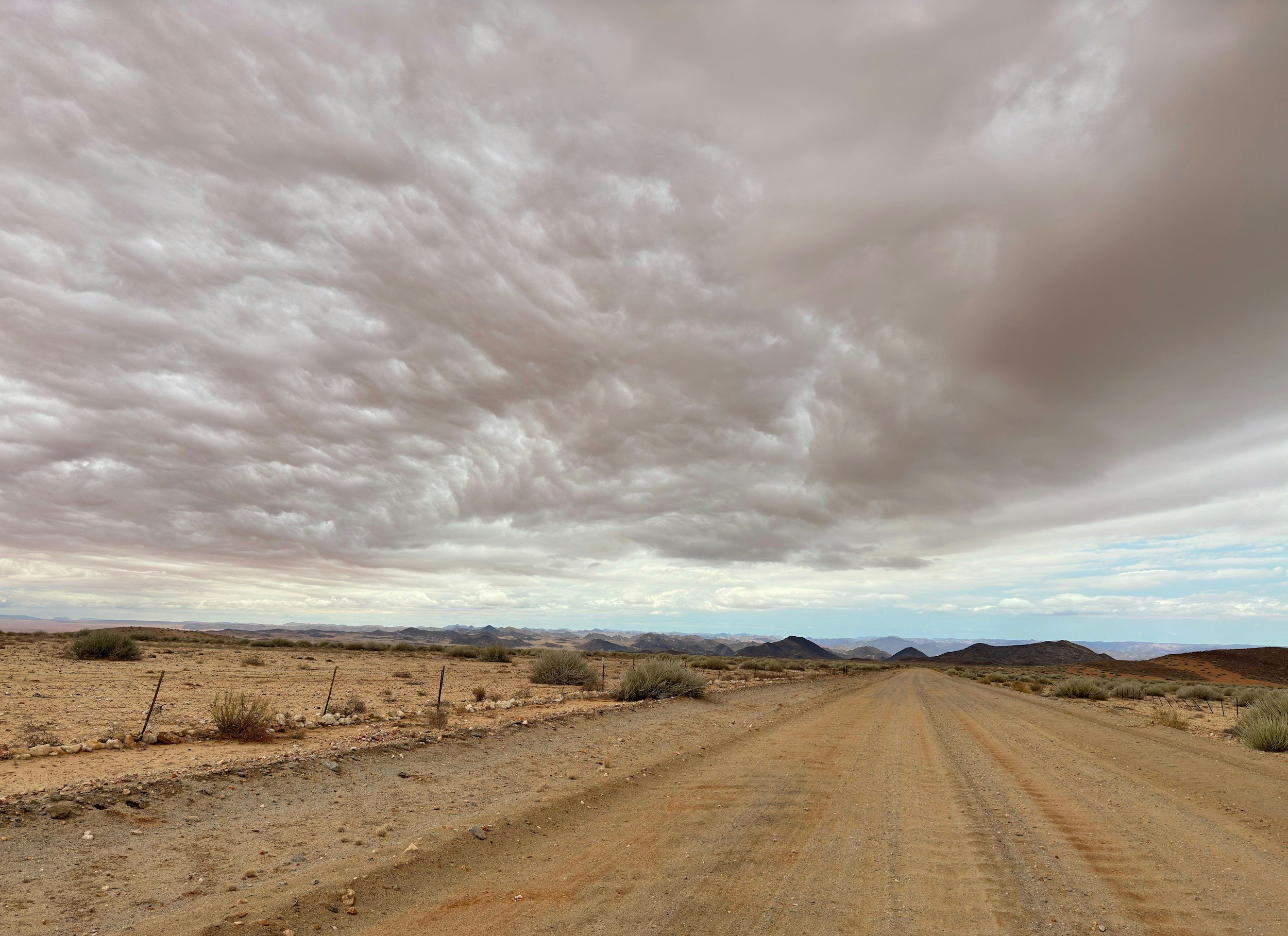
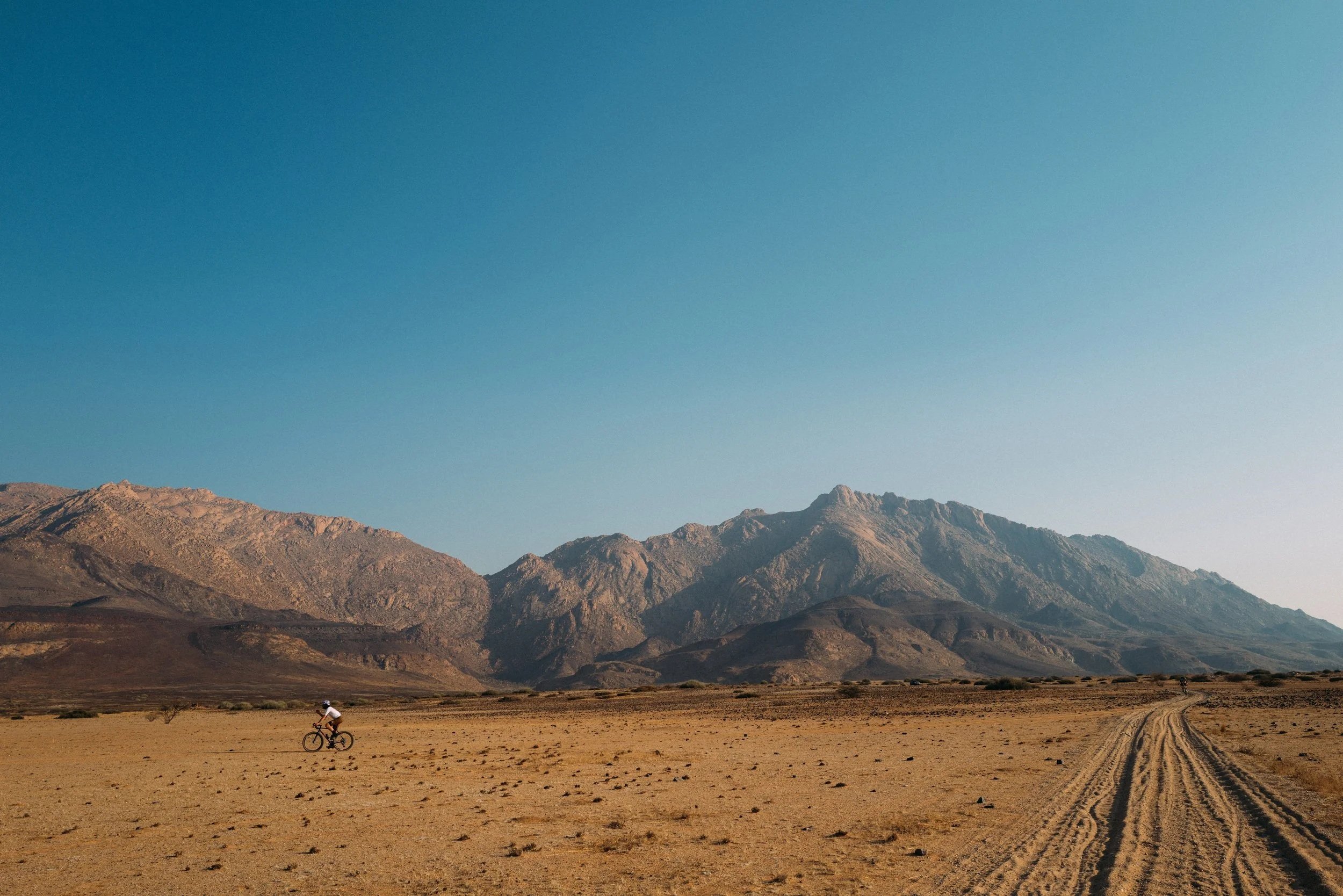
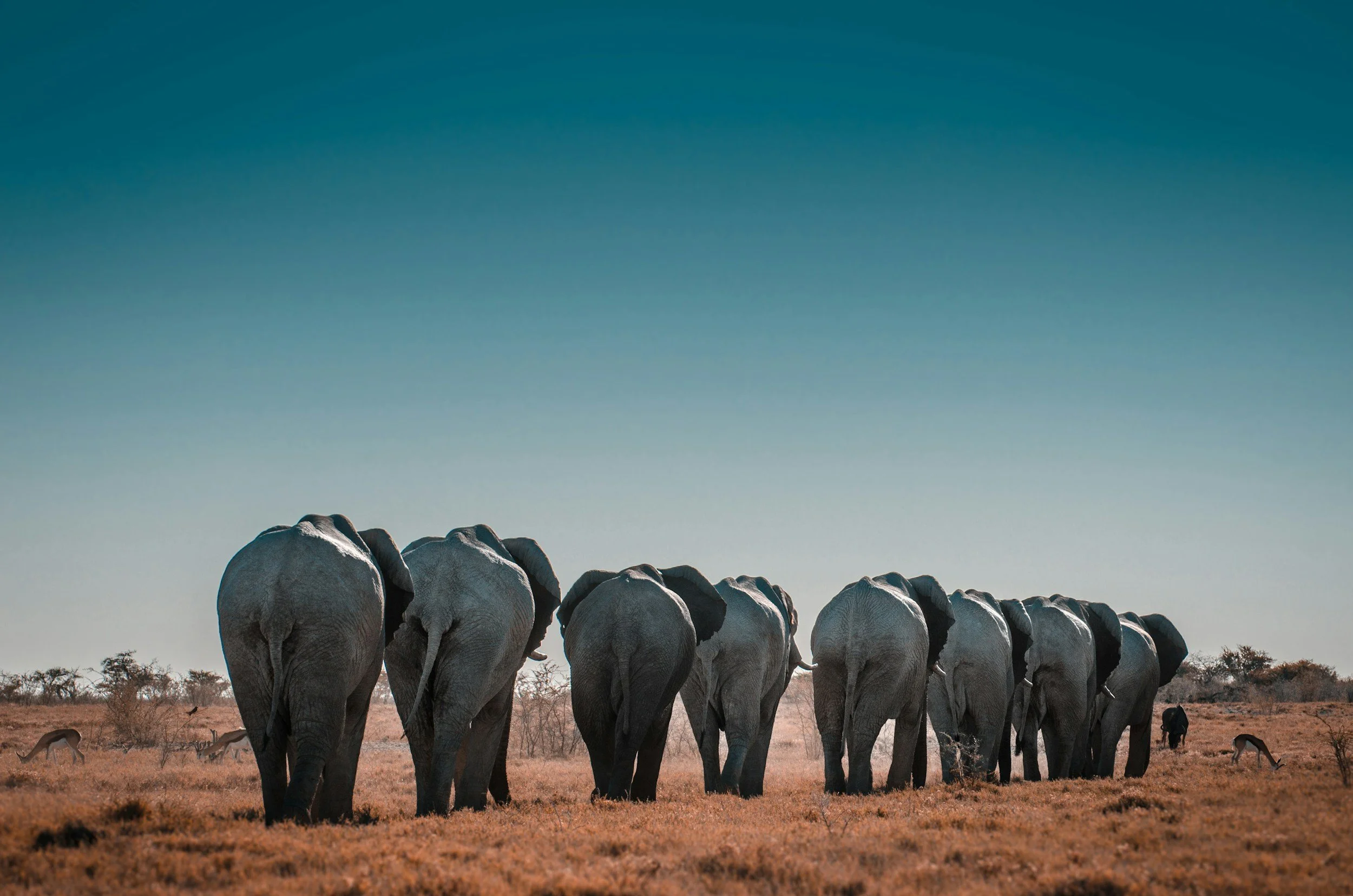
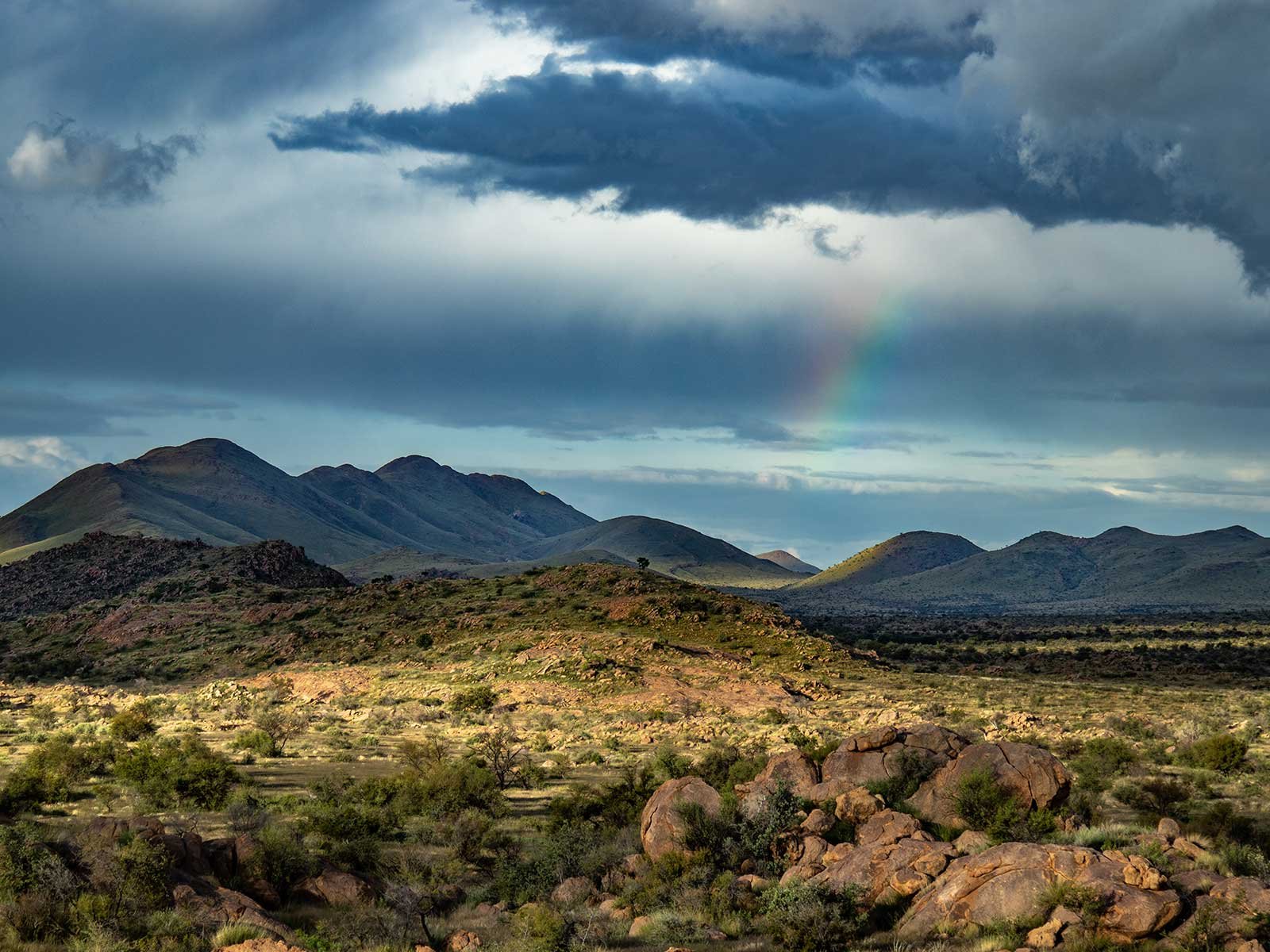
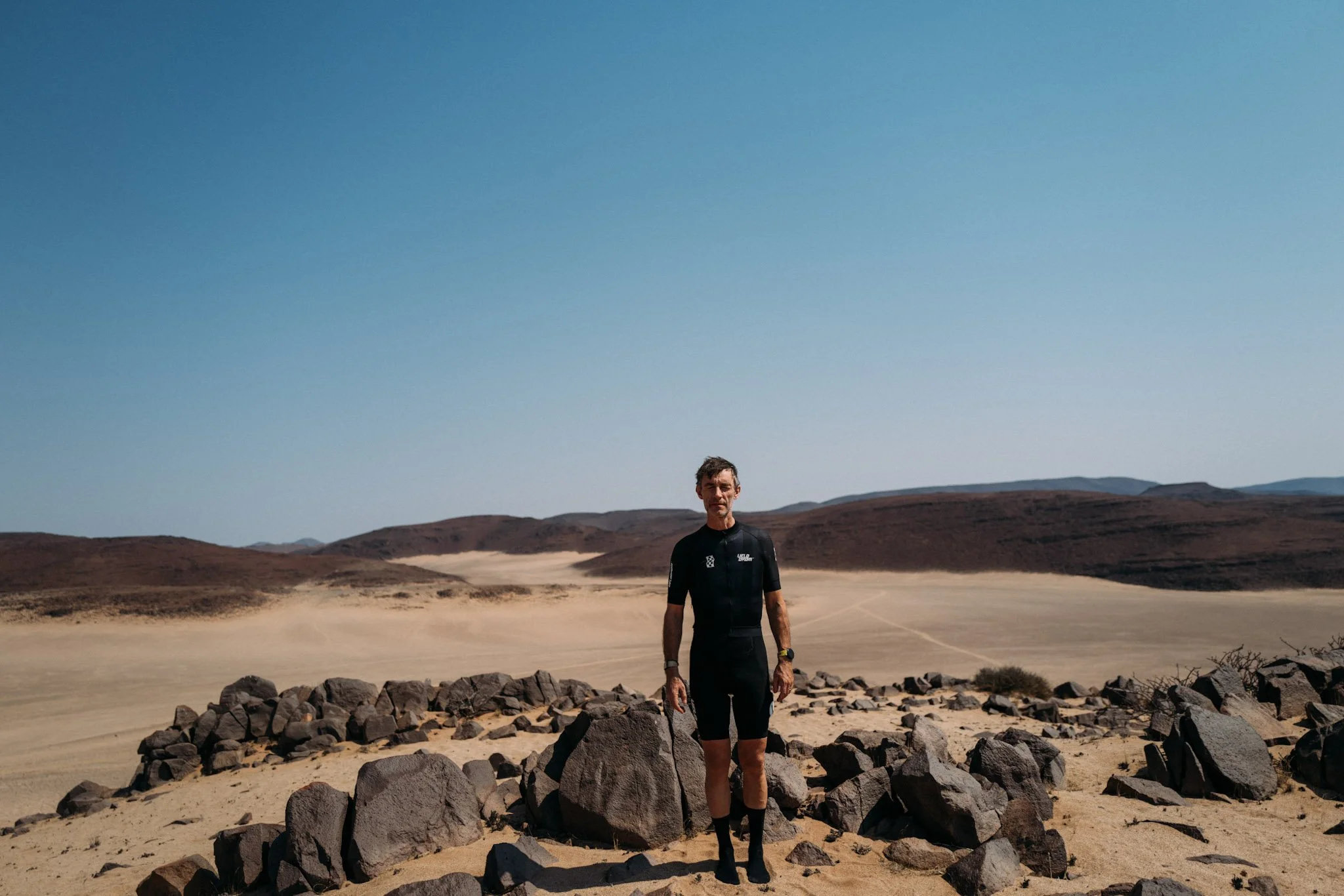
Namibia overwhelms the senses in quieter ways: vast desert plains, mountains shifting from purple to blue, wildlife encountered one moment at a time. Here, a single elephant crossing the horizon can feel more powerful than a herd. A sea of sand can hold your attention longer than any landmark. Quality outweighs quantity. Color feels unreal. The scale of the landscape recalibrates everything.
This isn’t travel designed to consume a place. It’s travel that asks you to slow down, look harder, and let the land set the terms.
D1 ARRIVAL WINDHOEK
Arrival Spin 24 mi / 39 km ✧ +1111 ft / +340 m (2:00)
Before the gravel begins, we recommend arriving through Cape Town—a soft landing before heading north. A few days of mountain air, long light, good food, and unhurried pace provide the perfect transition into southern Africa.
From there, Namibia.
Upon arrival in Windhoek, you’ll be welcomed and transferred to The Weinberg Hotel, your first base in country. Settle in, build your bike if you wish, and collect your RAID welcome bag—desert riding essentials assembled specifically for the journey ahead.
The remainder of the day is yours. Explore Windhoek’s blend of frontier history and modern Namibia, grab a coffee, or simply rest. As evening settles across the valley, join us at the Sky Lounge for your first Namibian sunset. A local ride may materialize. It may not. Either way, there is no rush.
Tonight is about arrival. Tomorrow the city falls away, and the landscape begins to open.
Welcome to Namibia.
D2 WINDHOEK - OKONJIMA
Touring 45 mi / 72 km ✧ +2200 ft / +670 m (3:20)
Windhoek disappears quickly.
Within minutes, pavement gives way to gravel, the city fades into the distance, and Namibia begins revealing itself on its own terms. The Khomas Highlands provide our first real taste of the country—fast roads, rugged mountains, sprawling ranches, and skies that seem to expand with every mile.
This isn’t a transfer-day spin. It’s a proper ride.
Back in Windhoek, a quick snack marks the end of the morning before we transfer north to Okonjima Nature Reserve. The shift feels important. Up until now, Namibia has been landscape. At Okonjima, it becomes wildlife.
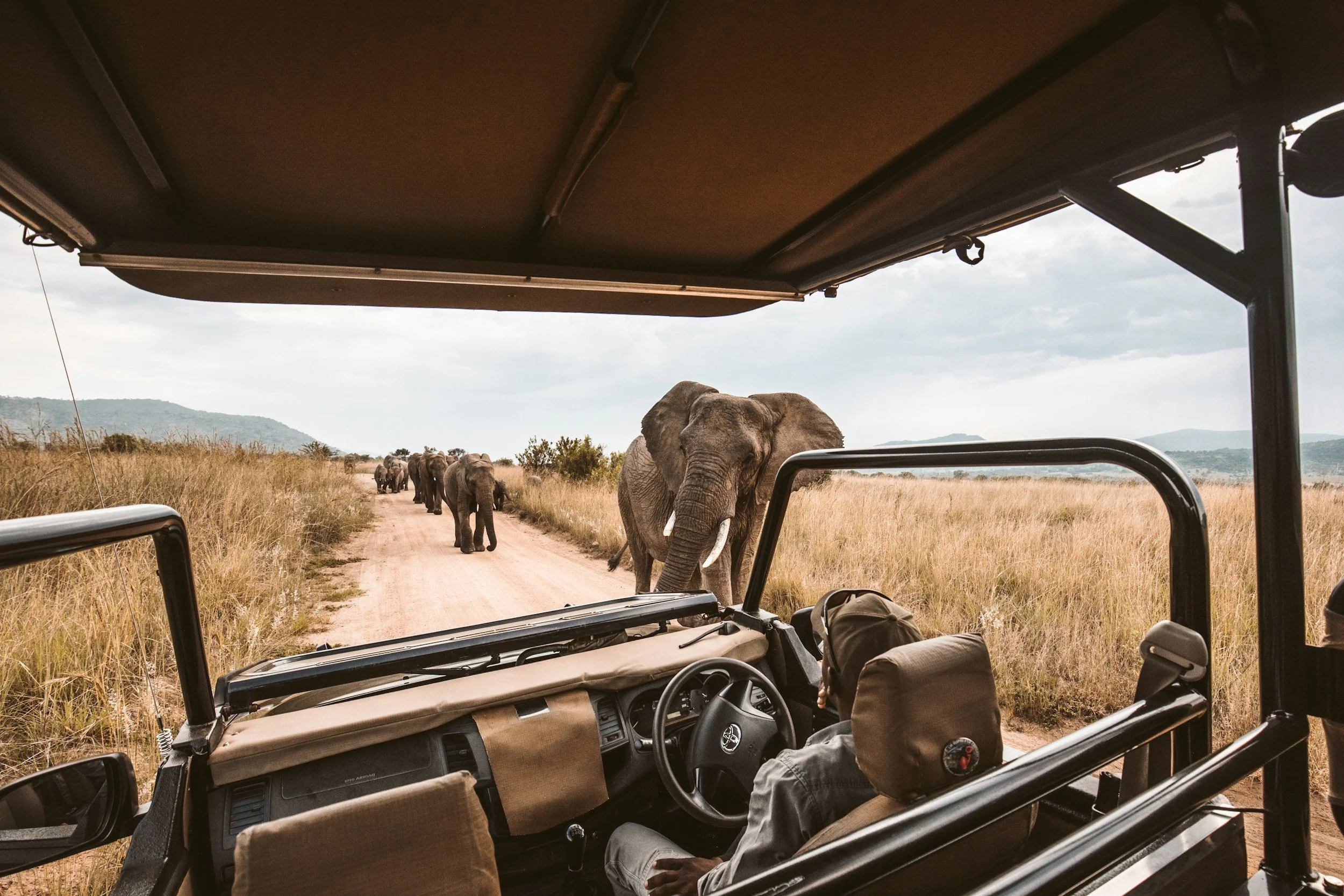
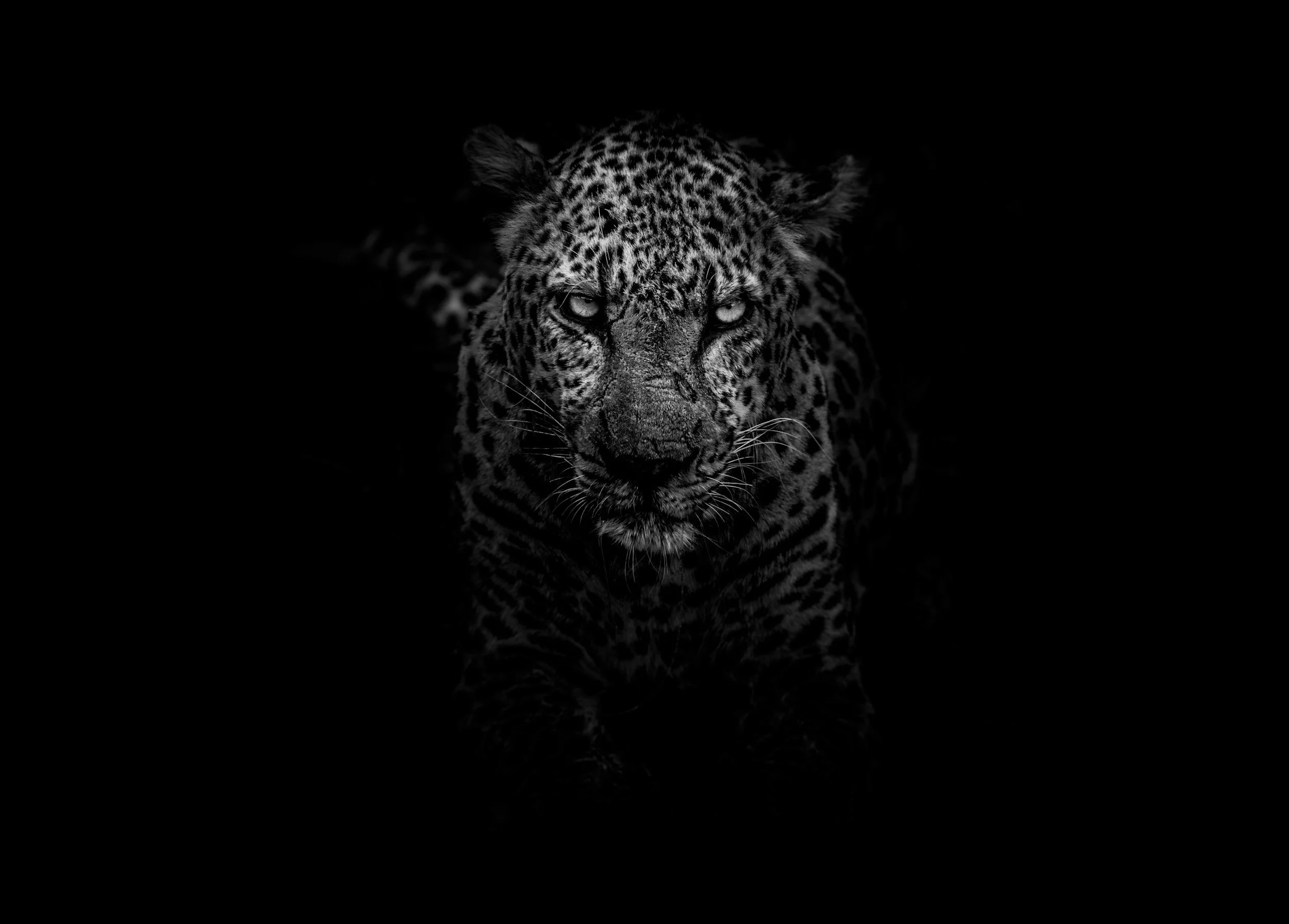
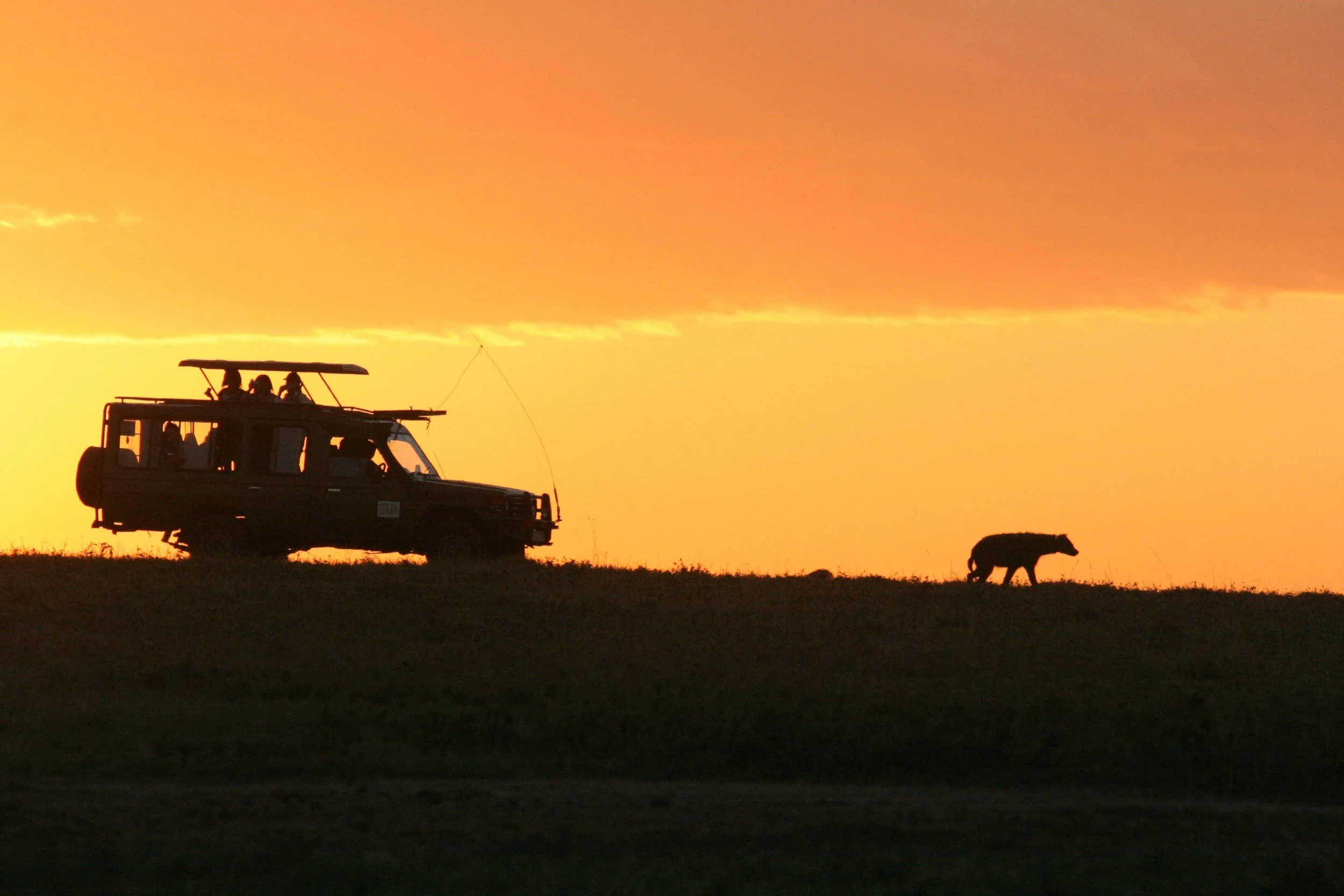
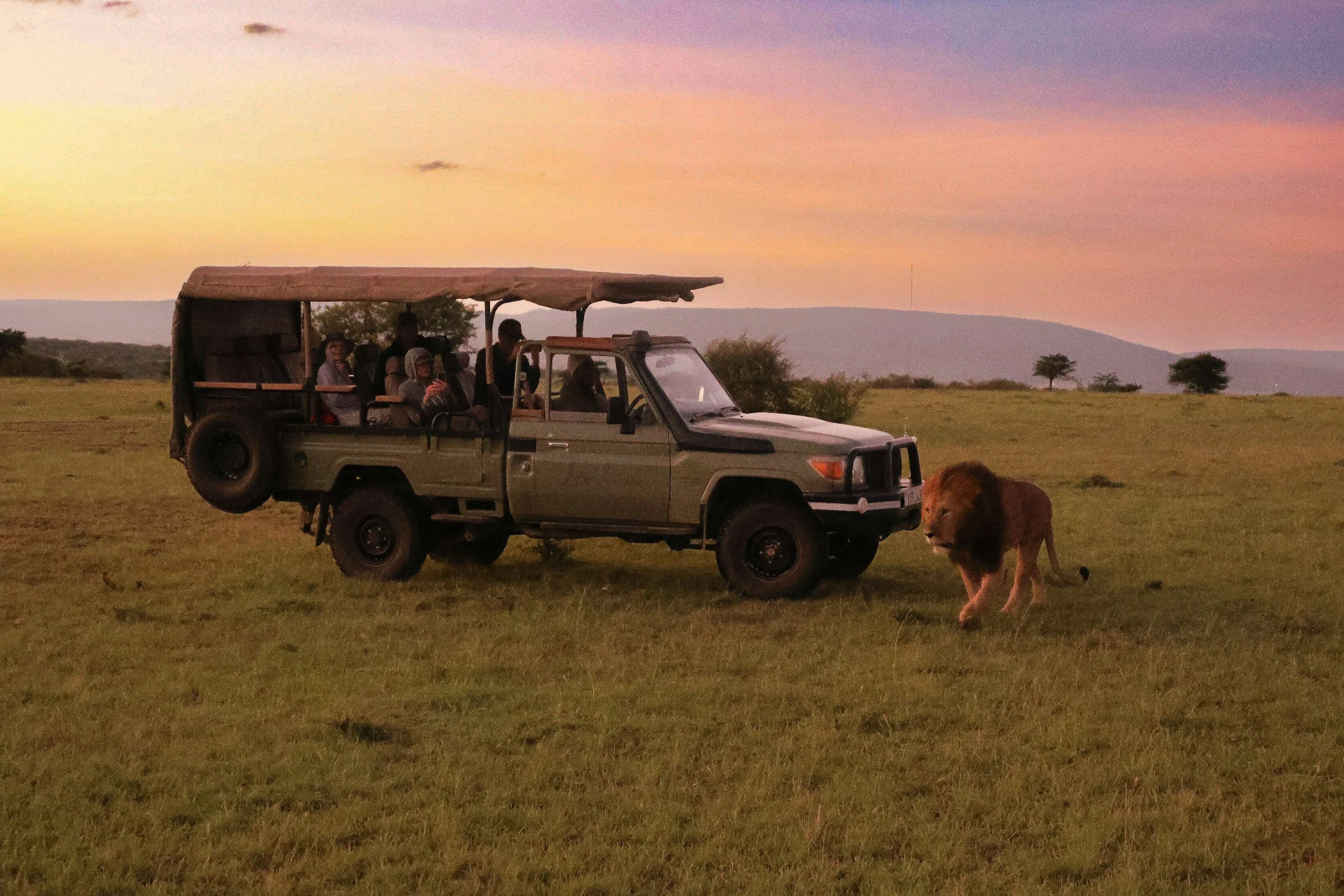
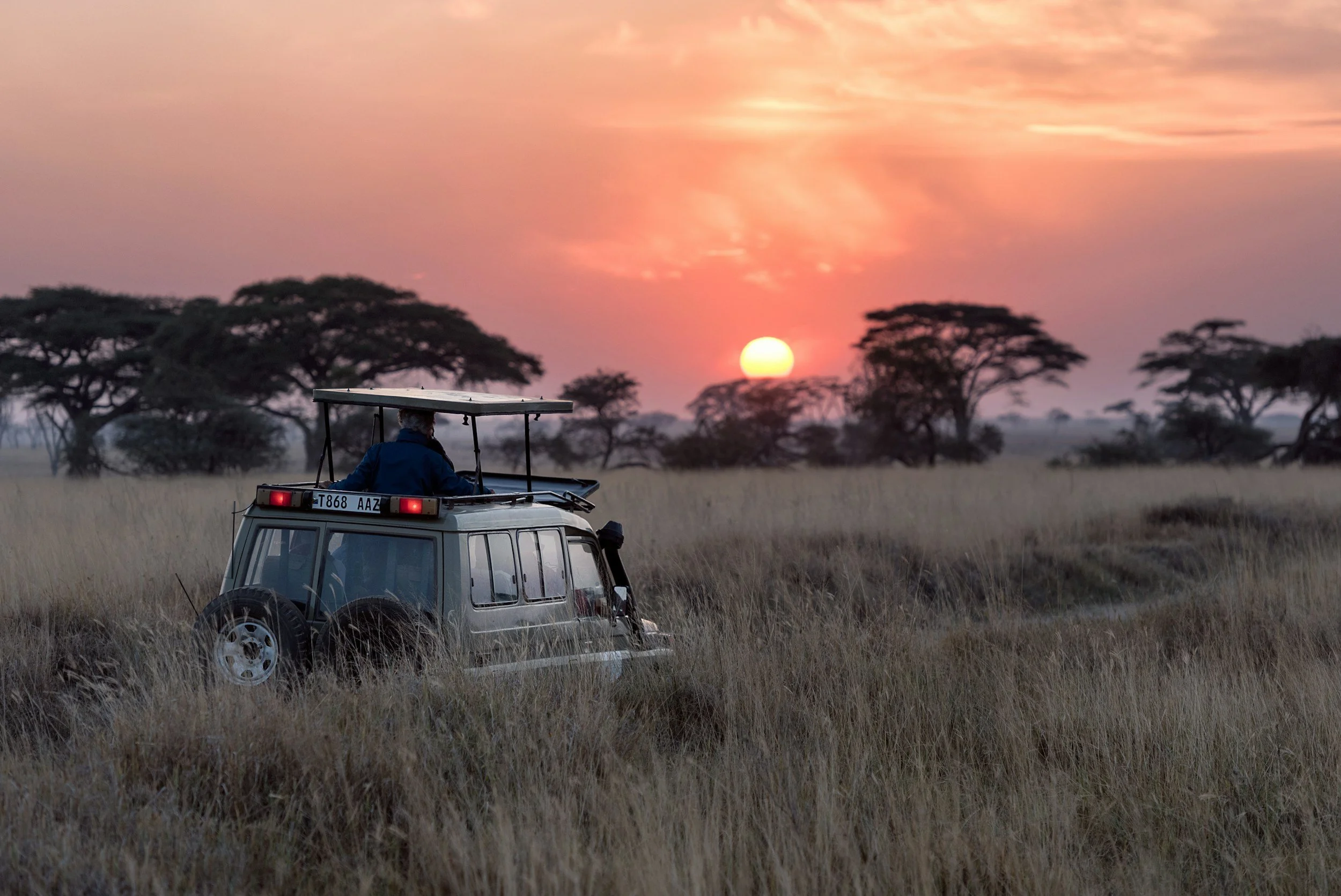
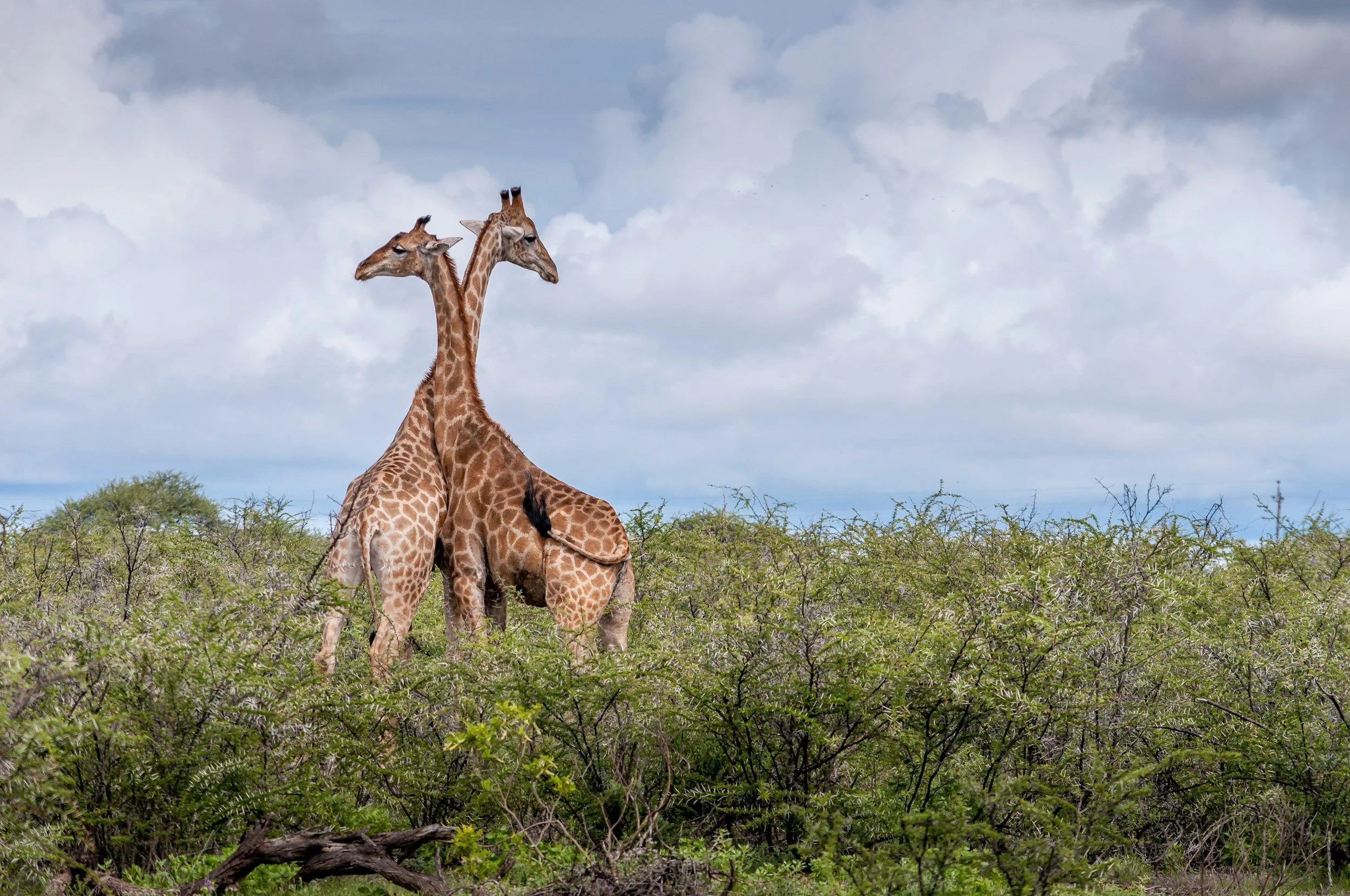
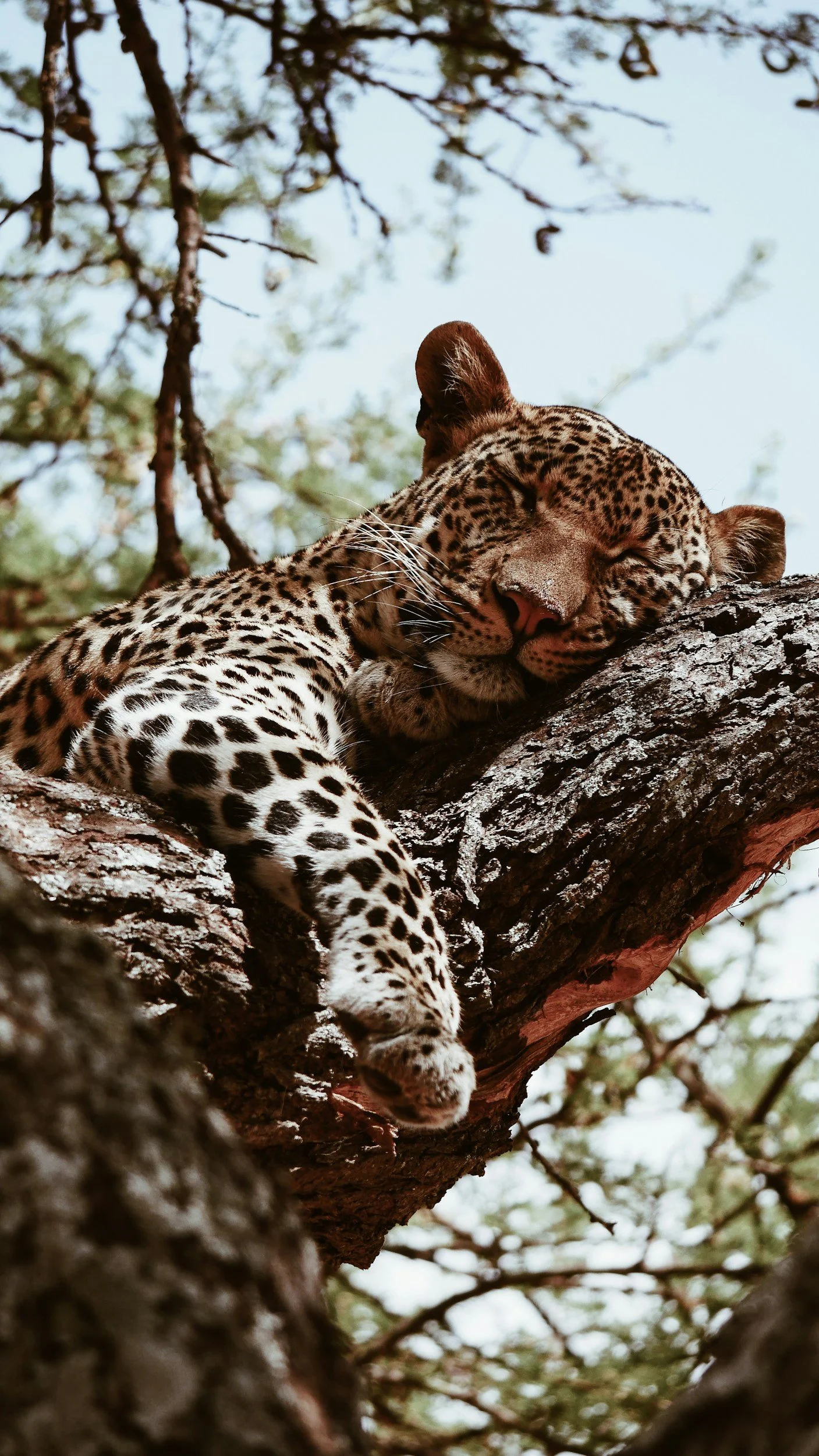
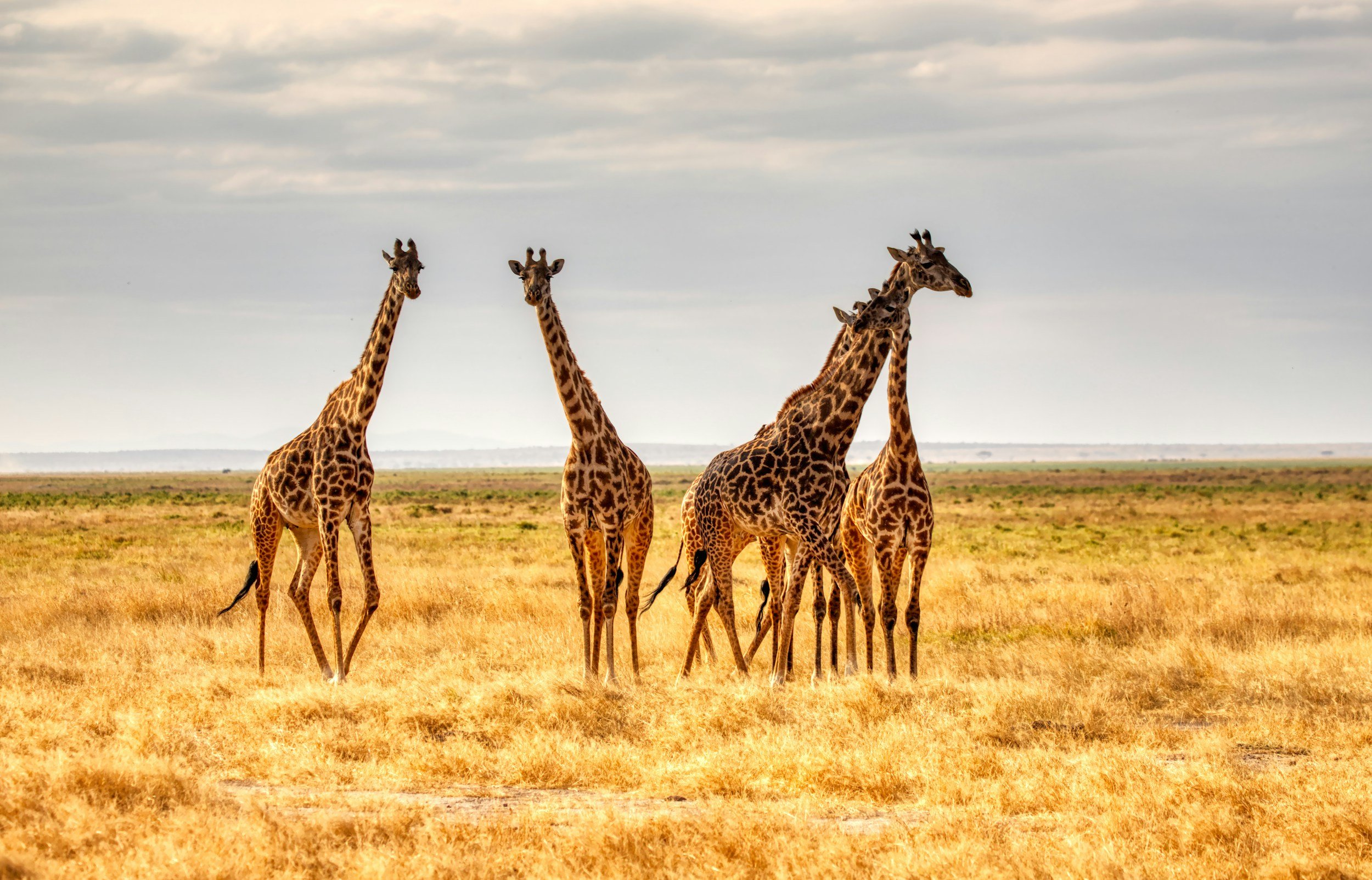
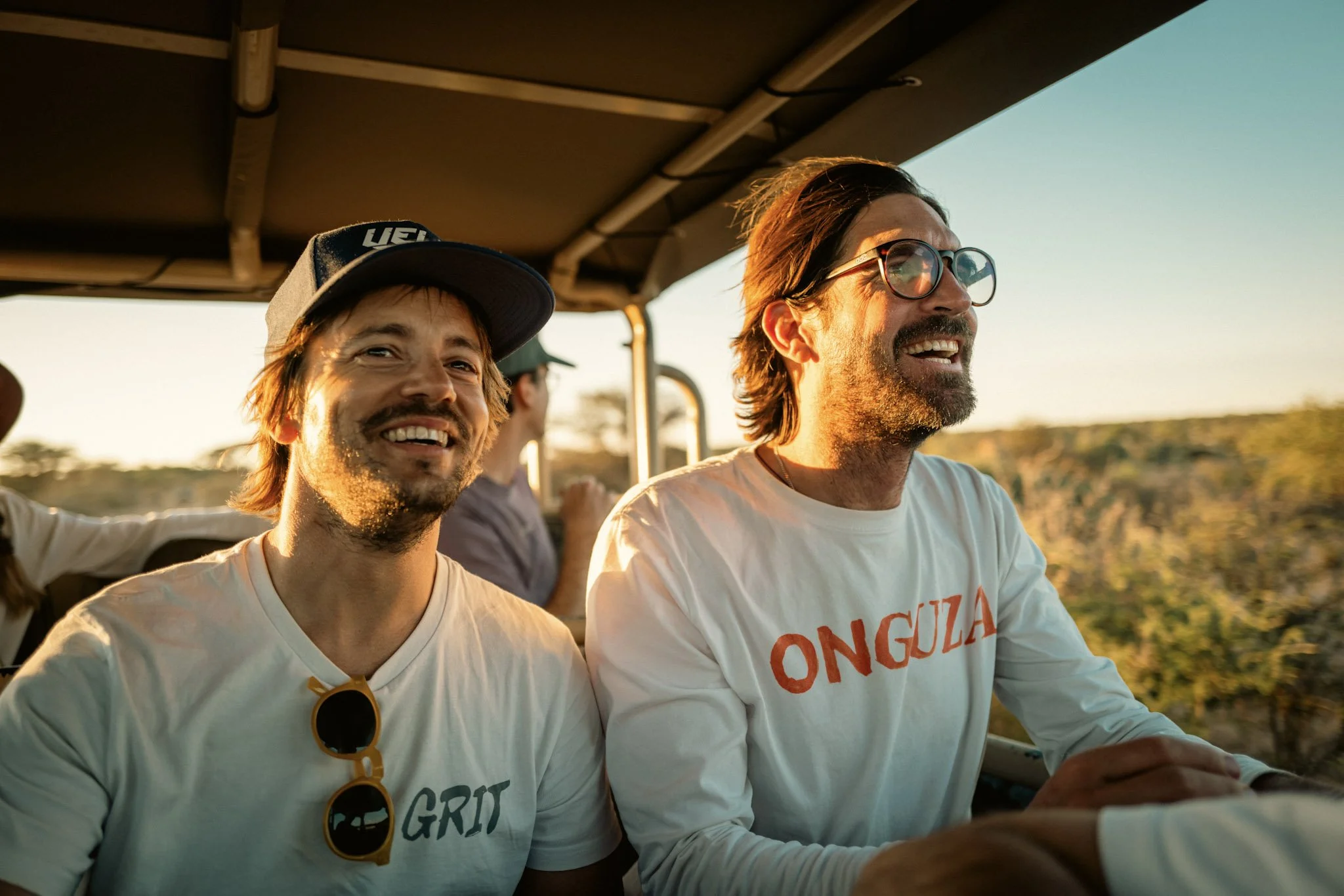
Home to the AfriCat Foundation, Okonjima is one of Namibia’s leading conservation success stories. After settling into the lodge, we trade bicycles for open-air Land Cruisers and head into the bush with private guides in search of leopard, giraffe, zebra, kudu, springbok, and countless other species.
As daylight softens, the reserve changes character. Brown hyena emerge. Birds settle into the trees. The bush grows quieter and somehow more alive.
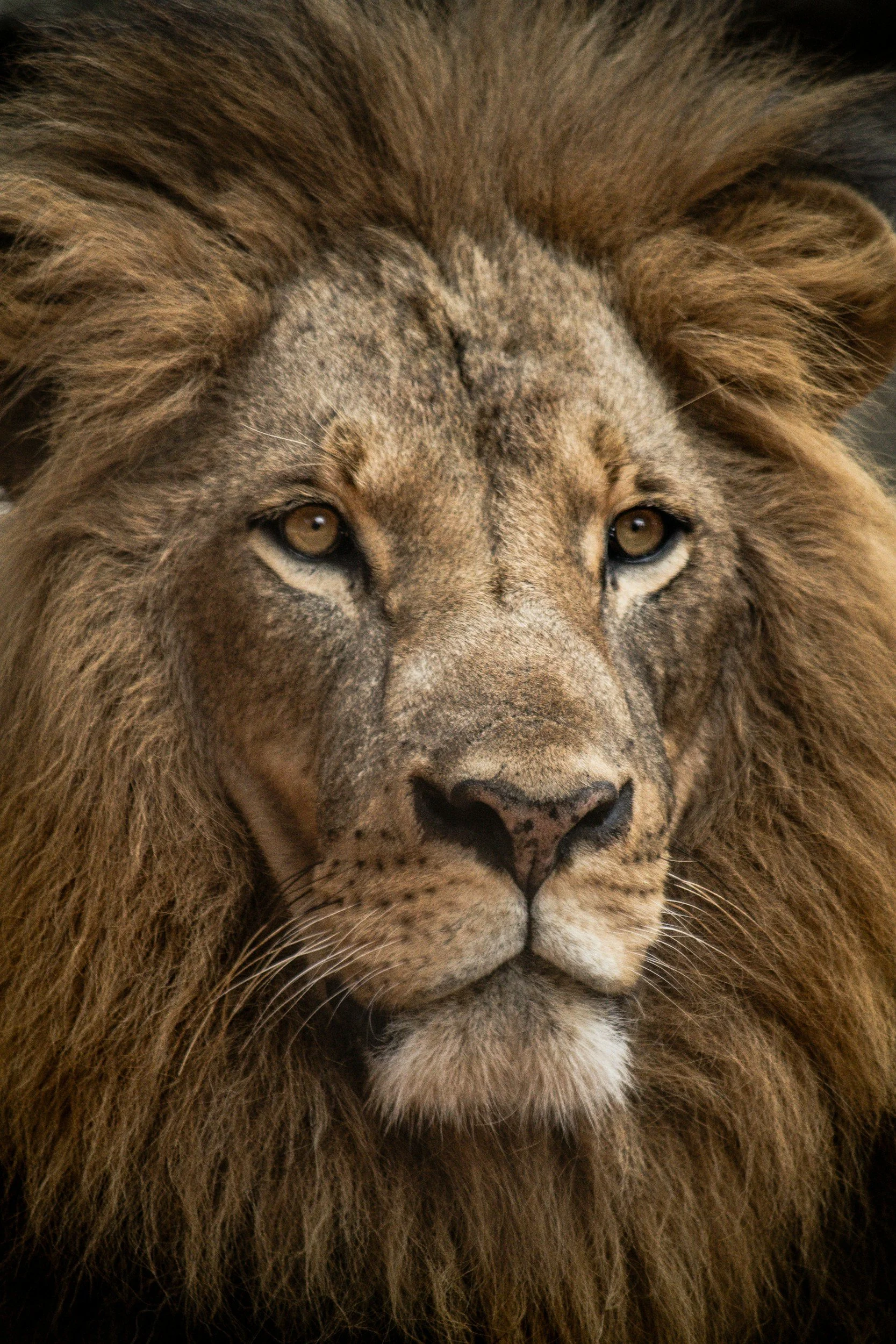
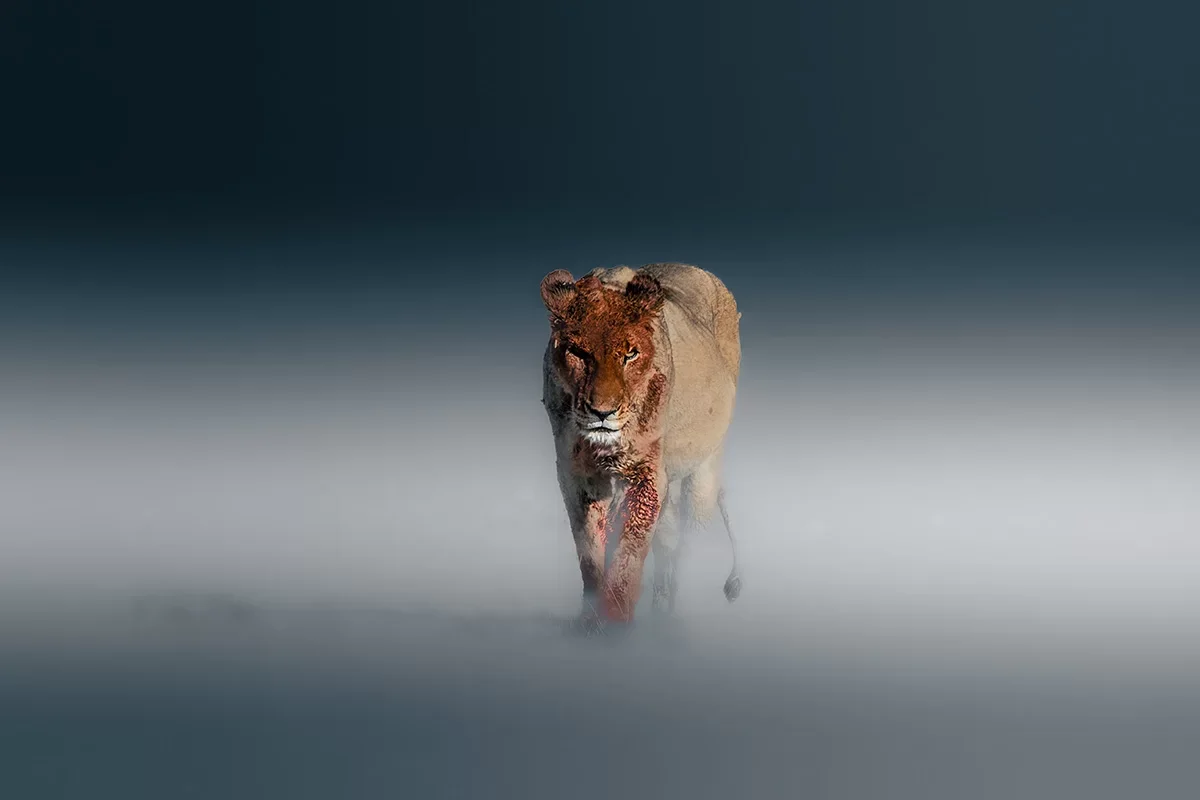
Depending on conditions, we may witness a lion feeding—an opportunity to better understand the reserve’s conservation and rehabilitation efforts. Every drive unfolds differently, shaped by weather, wildlife movement, and a bit of luck.
After dark, the experience can become even rarer. Pangolin tracking remains one of Africa’s most elusive wildlife encounters. Unscripted. Unpredictable. Never guaranteed. When the opportunity presents itself, we move carefully through the night alongside researchers and guides in search of one of the world’s most remarkable mammals.
We’ll spend two nights here, allowing Namibia’s wildlife story to unfold at its own pace.
O/N Okonjima Nature Reserve & Lodge
Download the comprehensive history of the Okinjima Reserve and Hansen Family found HERE.
D3 OKONJIMA
Unscripted: Okonjima - Tracking Rhino by Bike
Yesterday introduced us to Namibia’s wildlife. Today reveals something harder to find: the relationships that make experiences like this possible.
Through Donna Hanssen, co-owner of Okonjima, we discover a small but meaningful thread connecting this reserve to Dan Craven’s family. As a child, Donna was cared for by Patricia Craven—one of Namibia’s most respected nurses, botanists and Dan’s mother. It’s a simple story, but it explains something important.
Some places open through permits. Others open through people.
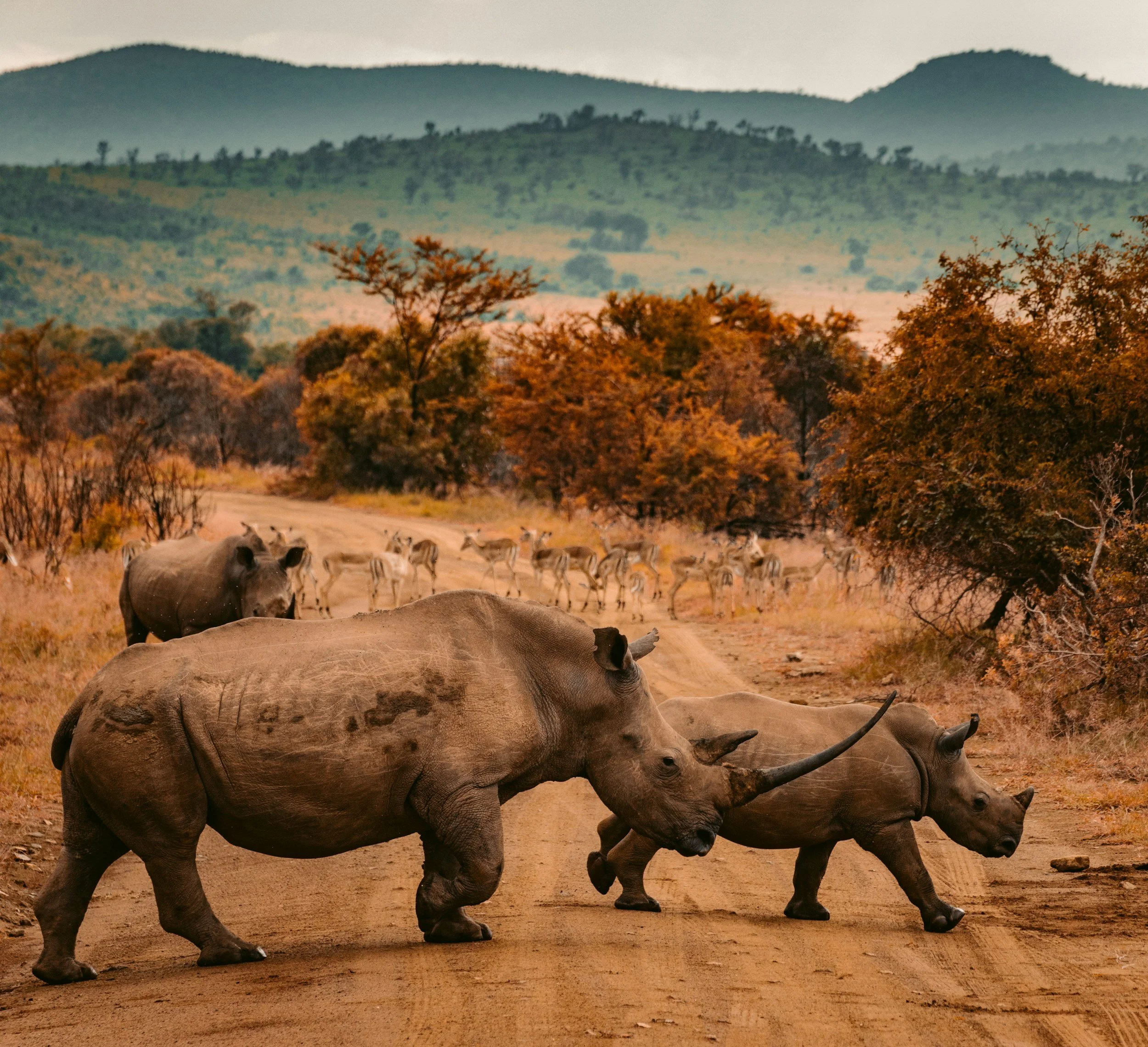
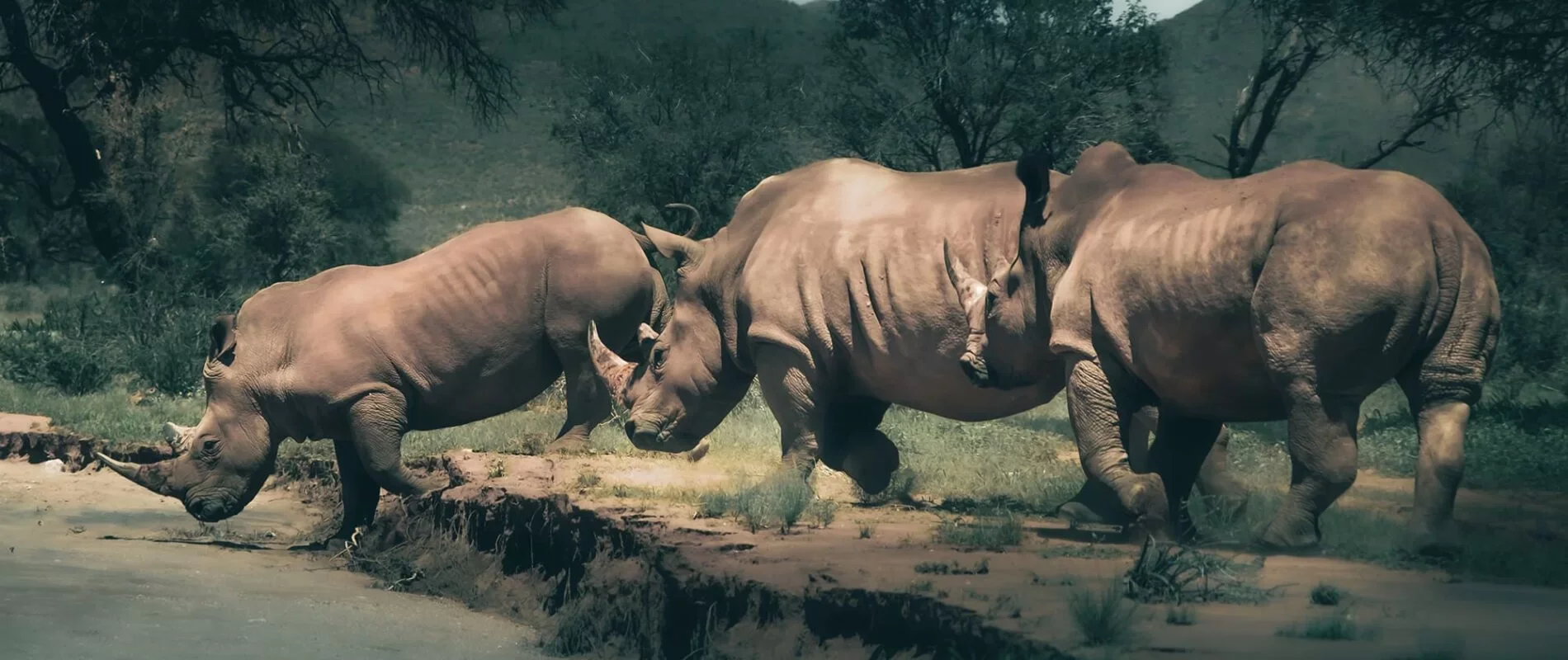
That trust extends throughout the reserve. Luigi Bassi—shareholder, cyclist, and husband to Rosalea Hanssen—knows these roads intimately. In conversation with Dan, an idea surfaced: what if we tracked rhino by bicycle?
It had never been done here before. Which made it feel exactly right.
Today there are no route files, no Strava segments, and no obsession with distance or elevation. We leave the performance mindset behind and follow Luigi onto the same farm roads, doubletrack, game trails, and forgotten tracks he rides himself. Maybe we ride 20 miles. Maybe 50.
Maybe we stop for an hour because the light turns perfect and nobody wants to move. The pace belongs to the landscape.
By afternoon, the original idea becomes reality. No staging. No spectacle. Just bicycles, wild country, and the rare kind of access that can’t be purchased outright—the kind earned slowly through friendship, trust, and time.
D4 OKONJIMA - ONDUDU LODGE
Touring - Ride the miles that matter to you.
Passhunter 96 mi / 155 km ✧ +2403 ft / +732 m (6:30)
The wildlife lingers long after we leave Okonjima behind.
But as the miles unfold, another side of Namibia begins to emerge. This is a country shaped as much by deep time as it is by conservation.
Heading south into Namibia’s working interior, thornveld gives way to open ranchland and dry river systems. Along the way we stop beside dinosaur tracks pressed into sandstone nearly 200 million years ago—a reminder that Namibia operates on a different timeline altogether.
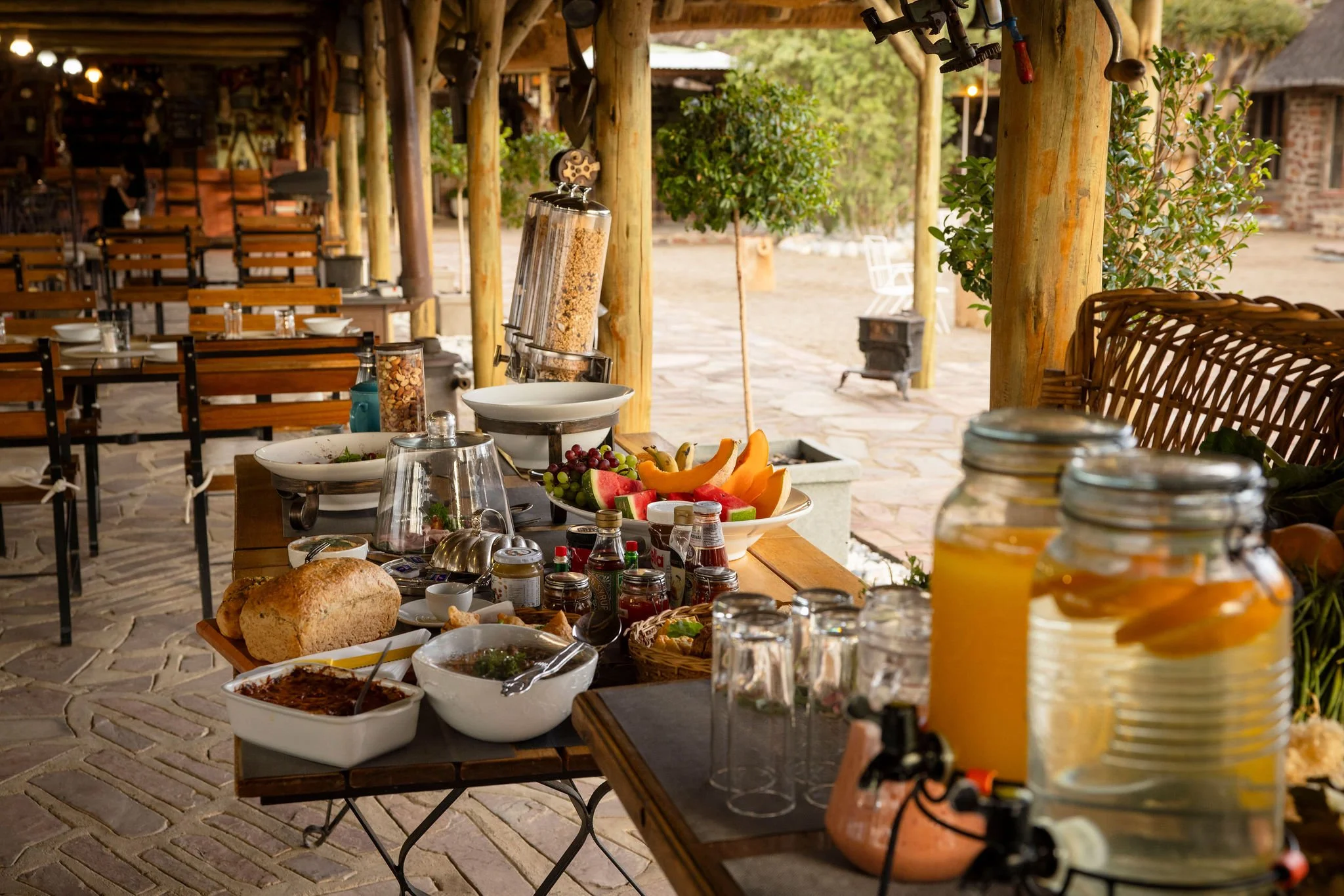
Fast gravel roads carry us toward TimBila, a private conservation area seldom visited by outsiders. An armed ranger team escorts us through the reserve, where wildlife moves freely across a landscape measured not in fences, but in horizons. Midday brings Camp Namibia, a riverside outpost hidden beneath the trees. Cold drinks appear. Pizzas emerge from the oven. For a brief moment, the miles stop mattering.
Then the Erongo Mountains begin to rise.
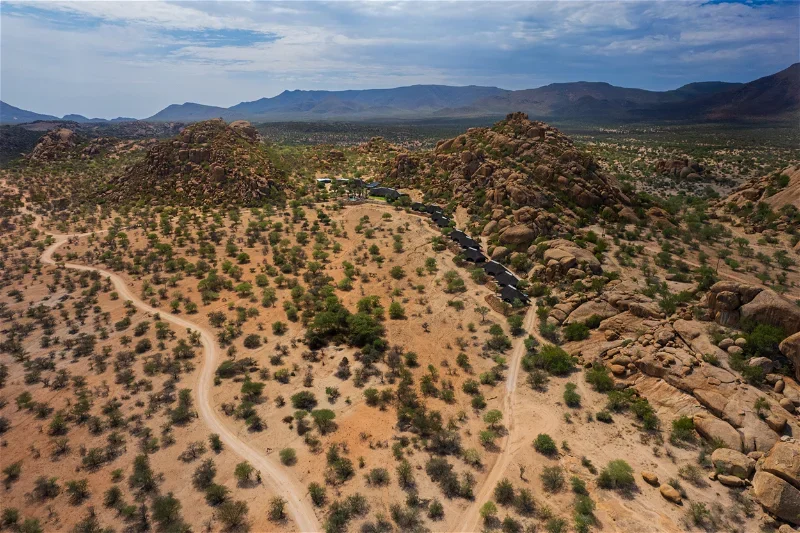
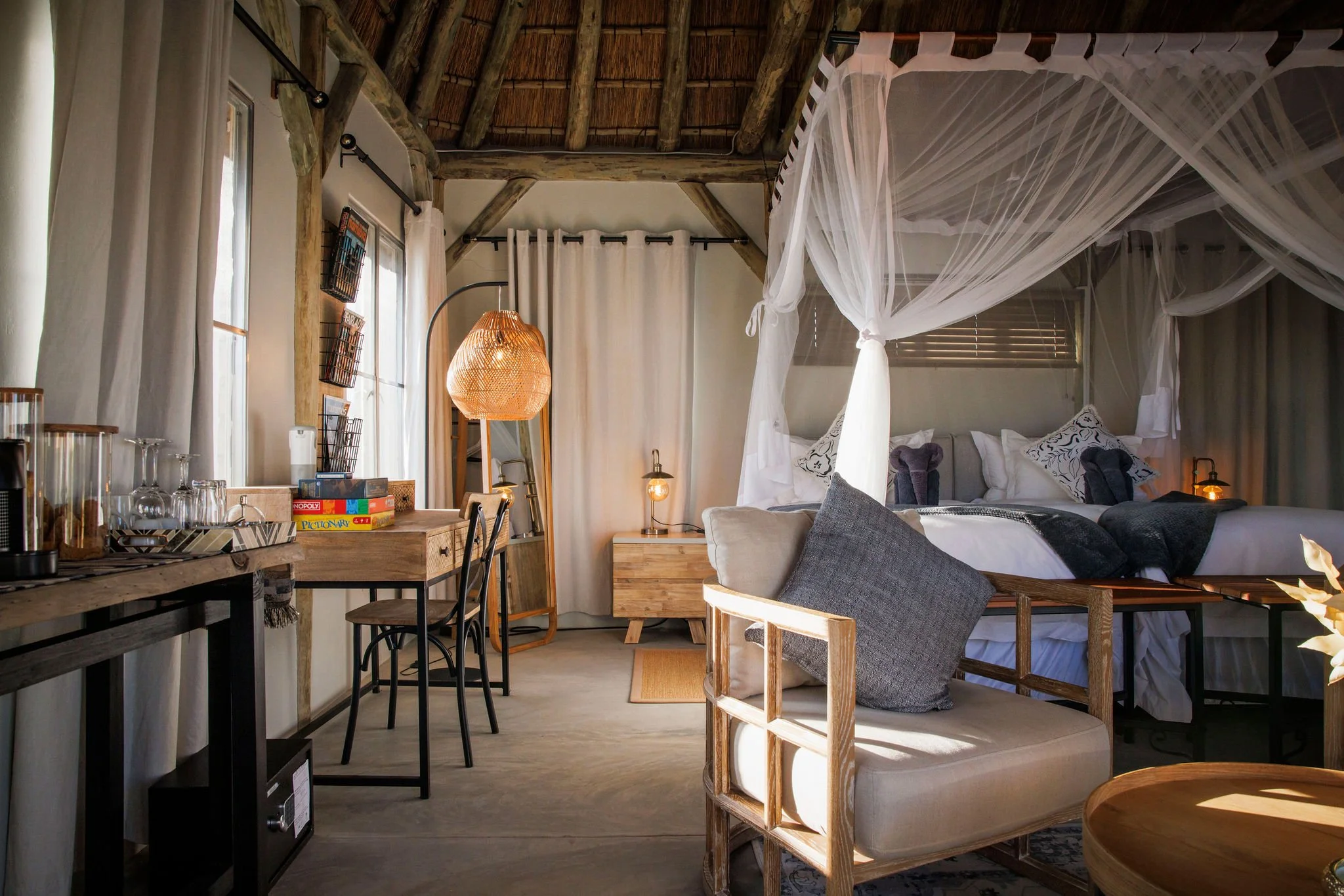
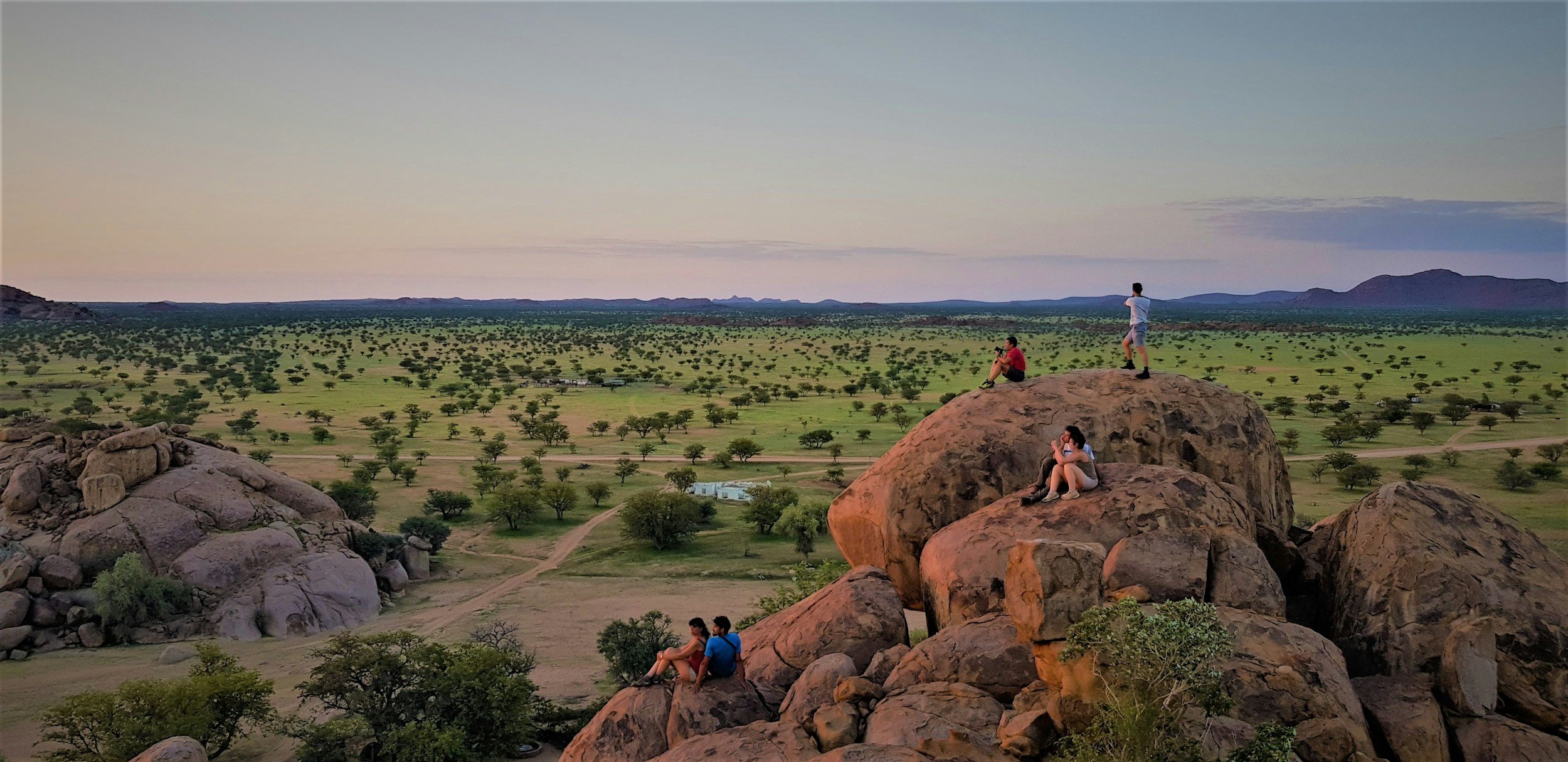
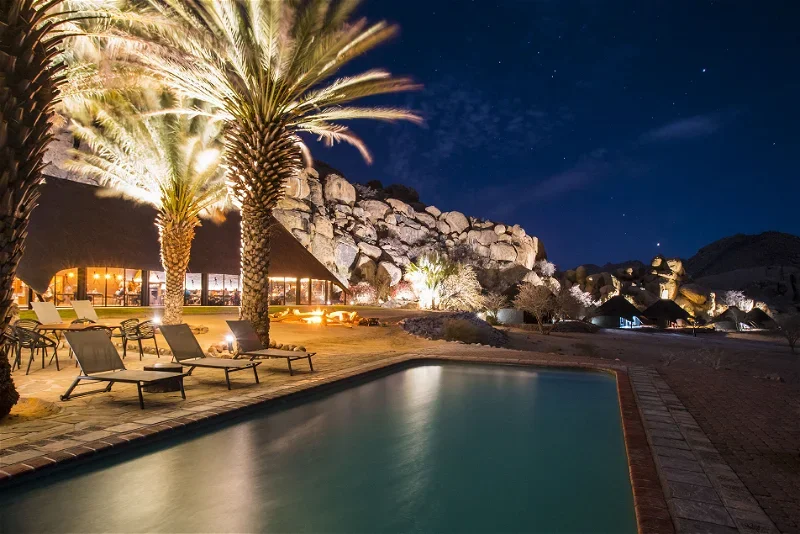
Ancient granite towers, balancing boulders, dry riverbeds, and volcanic remnants signal our arrival into one of Namibia’s most visually remarkable regions. Desert, mountain, and bushveld collide beneath impossibly wide skies. Hidden among the rocks sits Ondudu Safari Lodge. Elevated walkways disappear into the granite. Tented chalets blend into the landscape. The lodge feels less constructed than discovered.
As evening light sweeps across the formations, silence settles into the valleys below. The riding may be finished, but the experience continues.
Tomorrow, the focus shifts again—from geology to the people who continue to call this place home.
O/N Ondudu Safari Lodge
D5 - ONDUDU LODGE - oMURURU - AI-AIBA
Touring 44 mi / 70 km ✧ +1818 ft / +554 m (3:00)
Passhunter 87 mi / 140 km ✧ +3000 ft / +915 m (6:00)
The granite towers of Erongo remain on the horizon as we descend toward Omaruru, a town that exists because of water.
Long before roads, bicycles, or even Namibia itself, Herero and Damara communities moved through these valleys following seasonal rivers and trade routes. The land has always dictated movement here. It still does.
This morning brings us to the Onguza workshop. Coffee with the crew. Sparks, steel, paint, and dust. Sakeus and Petrus—now part-owners of the company—shape frames by hand while Elvis Presley Sageus works nearby with brush and paint. This isn’t a showroom. It’s a workshop in the truest sense. Real people building real bicycles in one of the most unlikely places imaginable.
Yesterday was about the age of the land. Today is about the people who continue to shape it.
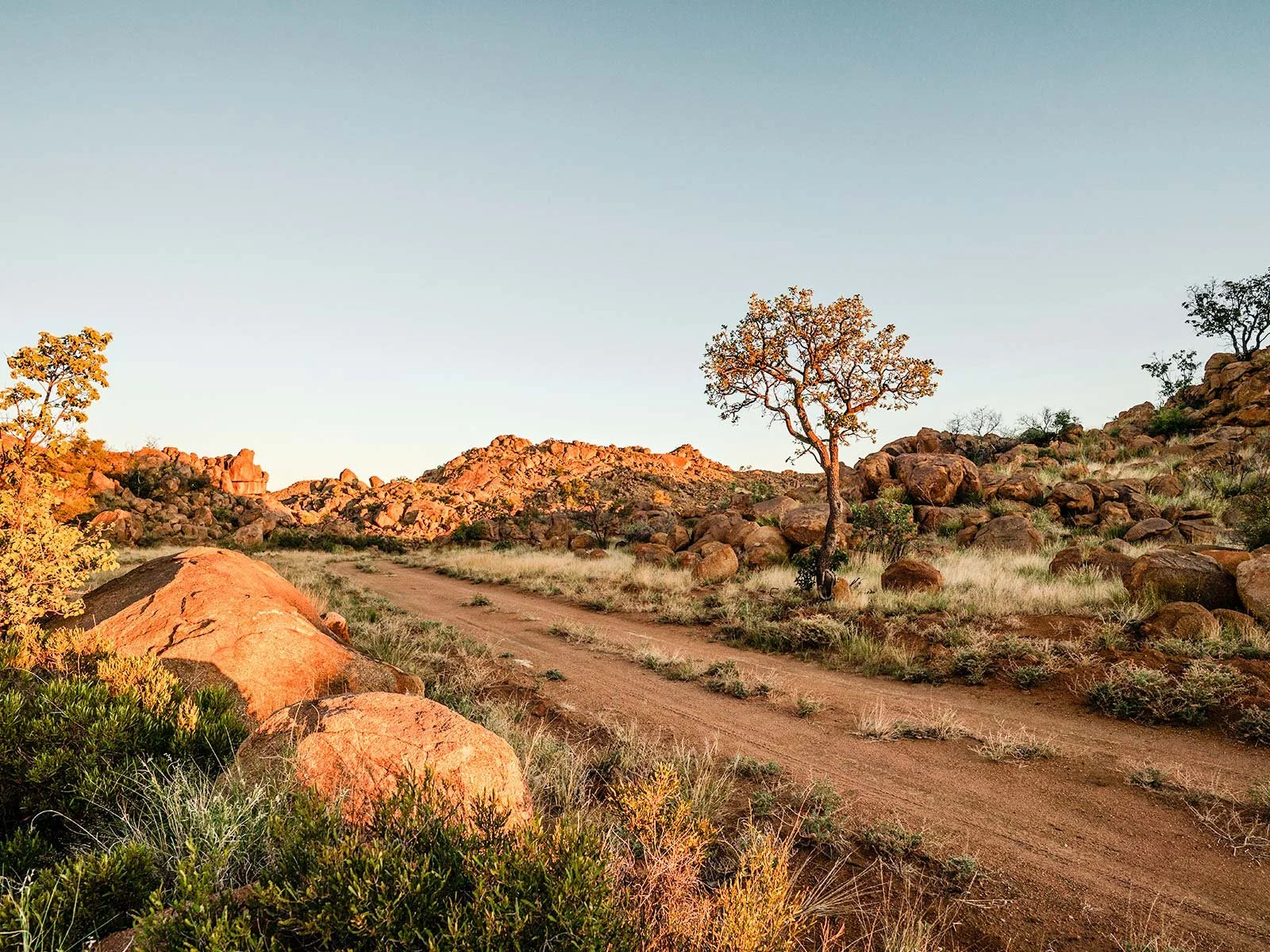
Soon we’re rolling alongside Dan and Kai, leaving Omaruru behind and disappearing into the farm roads, cattle tracks, dry river crossings, and hand-cut singletrack of the Craven family property. The riding feels personal. Less like a route and more like an introduction.
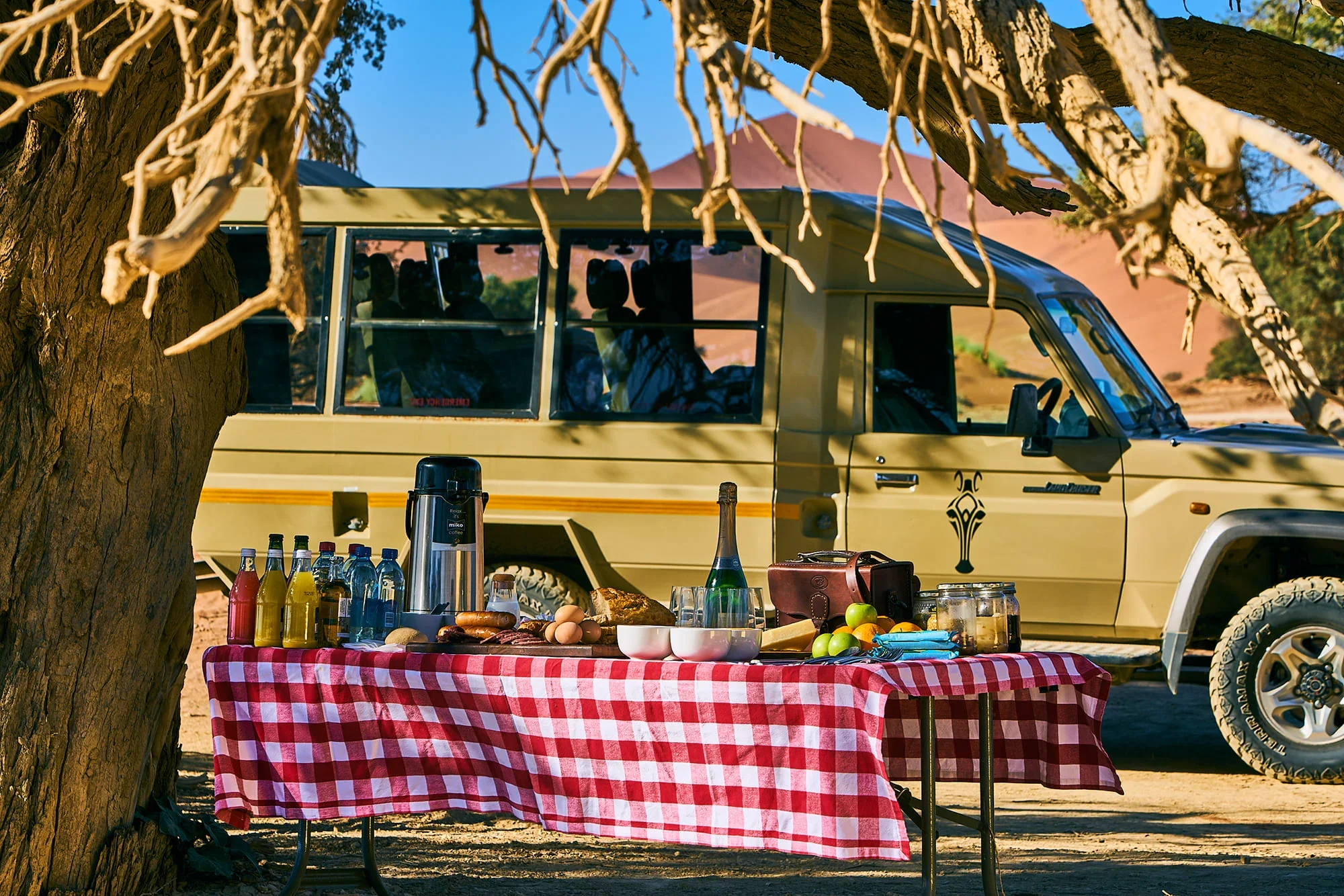
Granite appears everywhere. So does space. A trailside brunch emerges somewhere out in the wilderness before we eventually reconnect with the edge of town. From here, the journey divides.
The Touring route takes a direct line toward Ai-Aiba.
The Passhunters continue deeper into the interior toward Okombahe, heartland of the Damara people. The roads grow rougher. The settlements become fewer. The horizons somehow grow larger still.
By late afternoon, Ai-Aiba appears among the granite formations of the Erongo Mountains. The name translates loosely as “the one who bends down to listen.”
Tomorrow, we’ll do exactly that.
D6 AI-AIBA - THE ROCK PAINTING LODGE
On Foot, On Bike, Through History
MTB 15 mi /22.4 km ✧ +780 ft / +238 m (2:00)
By now, Namibia’s rhythms have started to feel familiar. The gravel roads, the distances, the silence, the constant presence of mountains on the horizon. Ai-Aiba asks us to look at the landscape differently.
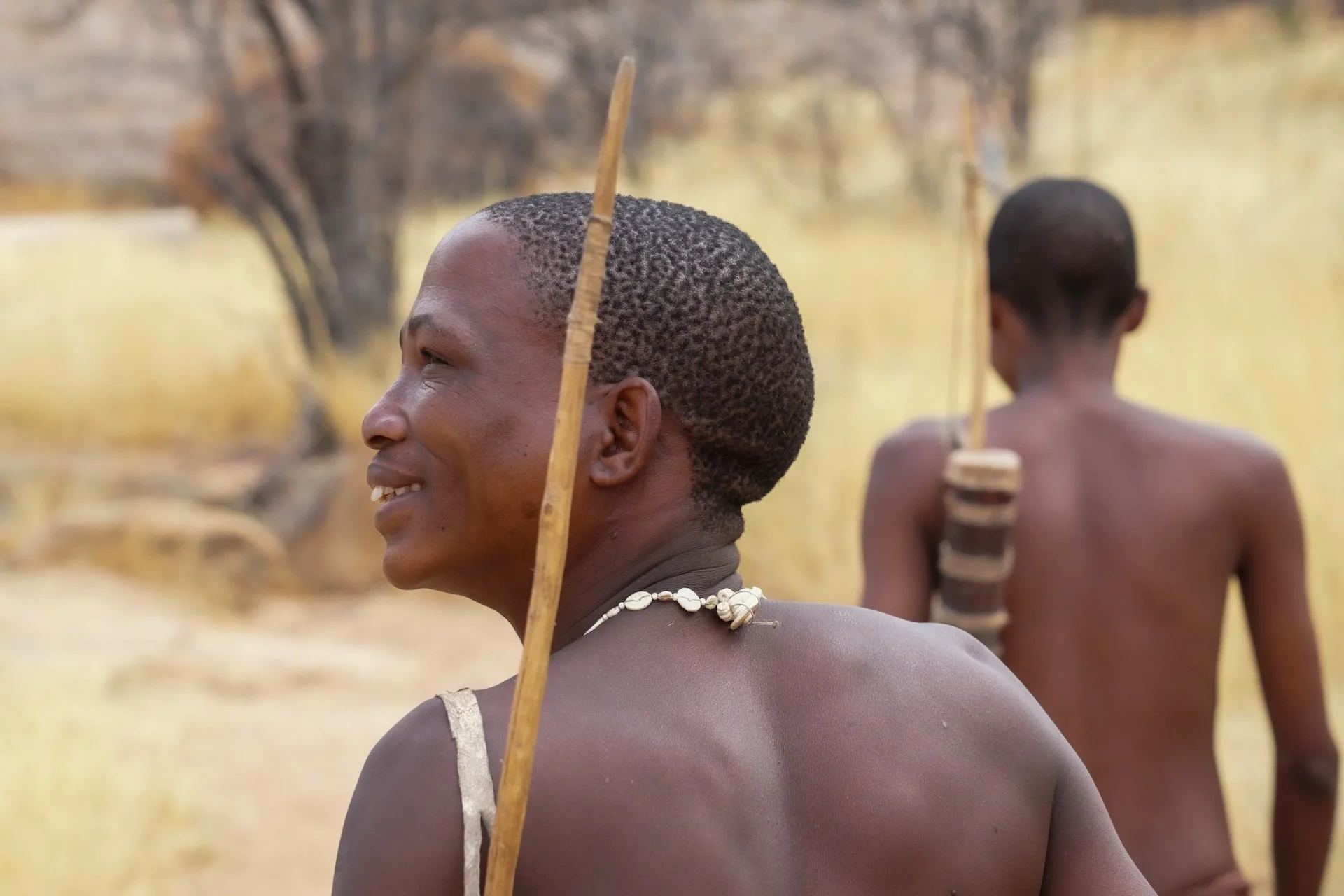
Set deep within the Erongo Mountains, Ai-Aiba is home to one of the largest concentrations of San rock art in southern Africa. Hundreds of sites are scattered throughout the granite formations, preserved by time, isolation, and the dry desert climate. This morning, members of the San community walk with us through the same terrain their ancestors moved across for generations, sharing a perspective shaped by survival, observation, and an intimate understanding of the land.
The experience changes how you see the landscape. Tracks become stories. Plants become tools. Rock formations become landmarks. What first appears empty reveals itself as a place rich with information, memory, and meaning. The paintings themselves begin to feel less like artwork and more like communication—messages left behind by people who understood this country in ways few of us ever will.
Later, we return to the bikes. The riding around Ai-Aiba is some of the most enjoyable in Namibia, with flowing trails winding between granite outcrops, open plains, and rocky corridors. Wildlife moves quietly through the background—gemsbok, giraffe, kudu, baboons, and occasionally leopard—while the trails encourage exploration rather than speed.
It’s a different kind of day. Less about covering distance and more about understanding place. As the sun drops behind the granite peaks and the mountains begin to glow in the evening light, another transition quietly takes shape. For days we’ve been moving through Namibia’s interior. Tomorrow, the landscape opens once again, and the journey continues west toward the Atlantic.
D7 - AI-AIBA - GOANIKONTES OASIS - SWAKOPMUND
Touring 53 mi / 86 km ✧ +853 ft / +260 m (3:30)
Passhunter 75 mi /122 km ✧ +1460 ft / +445m (5:00)
For nearly a week we’ve been moving through Namibia’s interior—wildlife reserves, ranchland, granite mountains, and landscapes that seem to stretch forever. Today, the country finally reveals where all of that space leads.
After an early breakfast, we transfer west toward Trekkopje, with the granite spires of Spitzkoppe floating on the horizon like a mirage. From here, we roll into a landscape shaped by both deep geological time and modern industry, skirting the edge of the massive Husab Mine before dropping into the dry Swakop River.
The riding quickly becomes exploratory. Roads fade into tracks, tracks dissolve into lines through sand and stone, and the route follows the natural contours of the river corridor. Ostrich drift across the desert floor, granite walls rise and fall around us, and the scale of the landscape becomes increasingly difficult to comprehend.
Beyond the river lies the Moon Landscape, a maze of ridges, gullies, and exposed rock carved by wind and water over millions of years. It is one of Namibia’s most remarkable geological formations and a reminder that this country is shaped as much by time as it is by distance.
By midday, Goanikontes Oasis appears from the stone and sand, a ribbon of palms and green hidden within the Swakop River valley. Here we stop for lunch beneath the trees before the routes divide.
The Touring group finishes at the oasis and transfers to Swakopmund. The Passhunters continue west, following forgotten desert tracks toward the Atlantic. The air cools, the wind shifts, and eventually the ocean appears—an abrupt and unforgettable transition from deep desert to open sea.
That evening, Swakopmund feels almost improbable. After days spent crossing Namibia’s interior, the cafés, restaurants, and sound of waves provide a brief reminder that civilization still exists. Tomorrow, we leave the coast behind and turn inland once again.
D8 SWAKOPMUND - ROOISAND
Touring 53 mi / 86 km ✧ +2748 ft / +847 m (4:00)
Passhunter 90 mi / 145 km ✧ +4512 ft / +1375 m (6:30)
The Atlantic disappears quickly in the rear-view mirror. After coffee and pastries at Two Beards, we roll south through Walvis Bay, passing flamingos, salt pans, and the last signs of the coast before turning inland once again.
The transition is immediate. Cool ocean air gives way to desert heat as the Namib begins to pull us back into its interior. The gravel stretches toward distant mountains, horizons blur in the heat, and the scale of the landscape becomes difficult to judge.
Midway through the day, the desert suddenly falls away. The Kuiseb Canyon cuts across the Namib like a scar, carved over millennia by seasonal floods powerful enough to reshape the land. Standing on the rim, it’s easy to understand why this remote canyon became the refuge of two German geologists during World War II, a story later immortalized in The Sheltering Desert.
For the Passhunters, an early detour through Ganab Waterhole and some of Namibia’s finest gravel adds another layer of exploration before reconnecting with the main route.
As the day unfolds, the landscape begins to change once again. Endless desert plains gradually give way to higher ground, deeper valleys, and the first signs of Namibia’s central highlands. The transition is subtle at first, then impossible to miss.
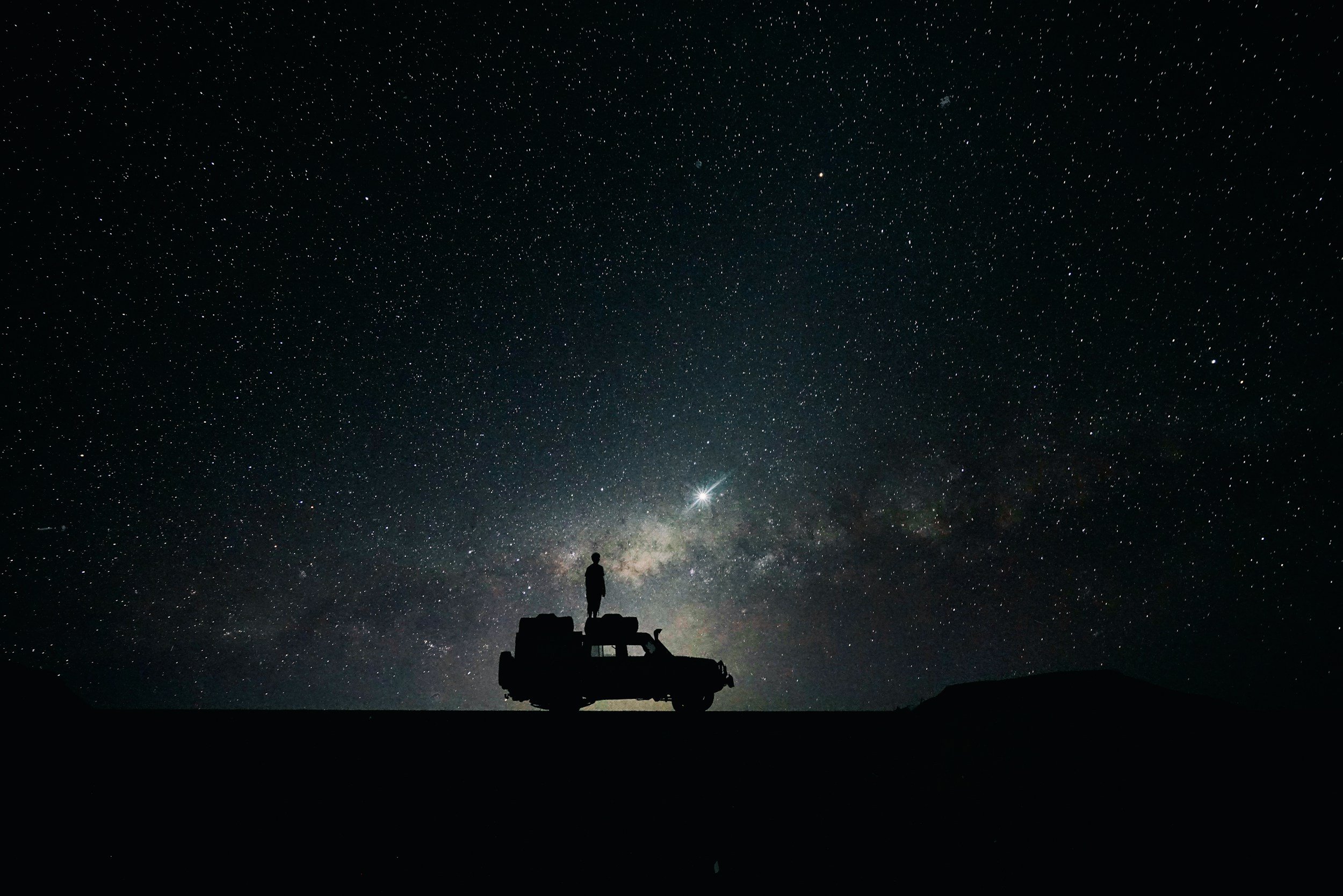
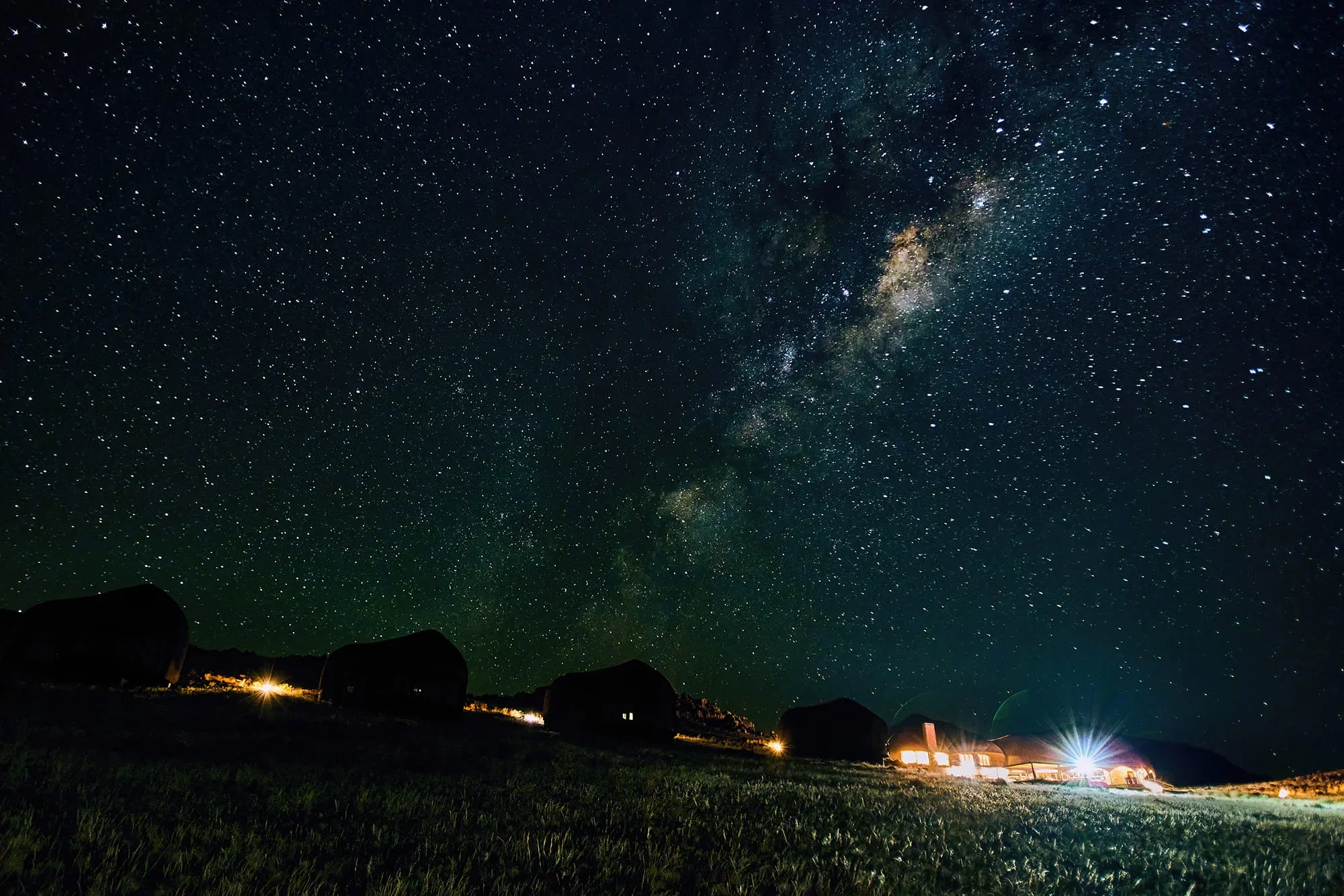
Late in the afternoon, Rooisand Desert Ranch appears among wide valleys, granite peaks, and open grasslands. Part working ranch, part desert outpost, Rooisand offers a different side of Namibia—one defined by big skies, good conversation, and some of the darkest night skies on Earth. After a day spent crossing the Namib, there may be no better place to watch the stars arrive.
O/N Rooisand Desert Ranch
D9 ROOISAND - NAMIBGRENS
73.5 mi / 118 km ✧ +4821 ft / +1469 m (5:30)
By now, the rhythm of Namibia feels familiar. Gravel roads stretch toward distant horizons, the traffic count remains close to zero, and the landscape continues to unfold on a scale that is difficult to find anywhere else on Earth.
Leaving Rooisand, we ride deeper into the Khomas Highlands, trading desert plains for rolling grasslands, granite peaks, and a maze of valleys that define Namibia’s central plateau. The riding is classic Namibia—long, quiet gravel roads rising and falling across broad ridges, each climb revealing another horizon beyond the last.
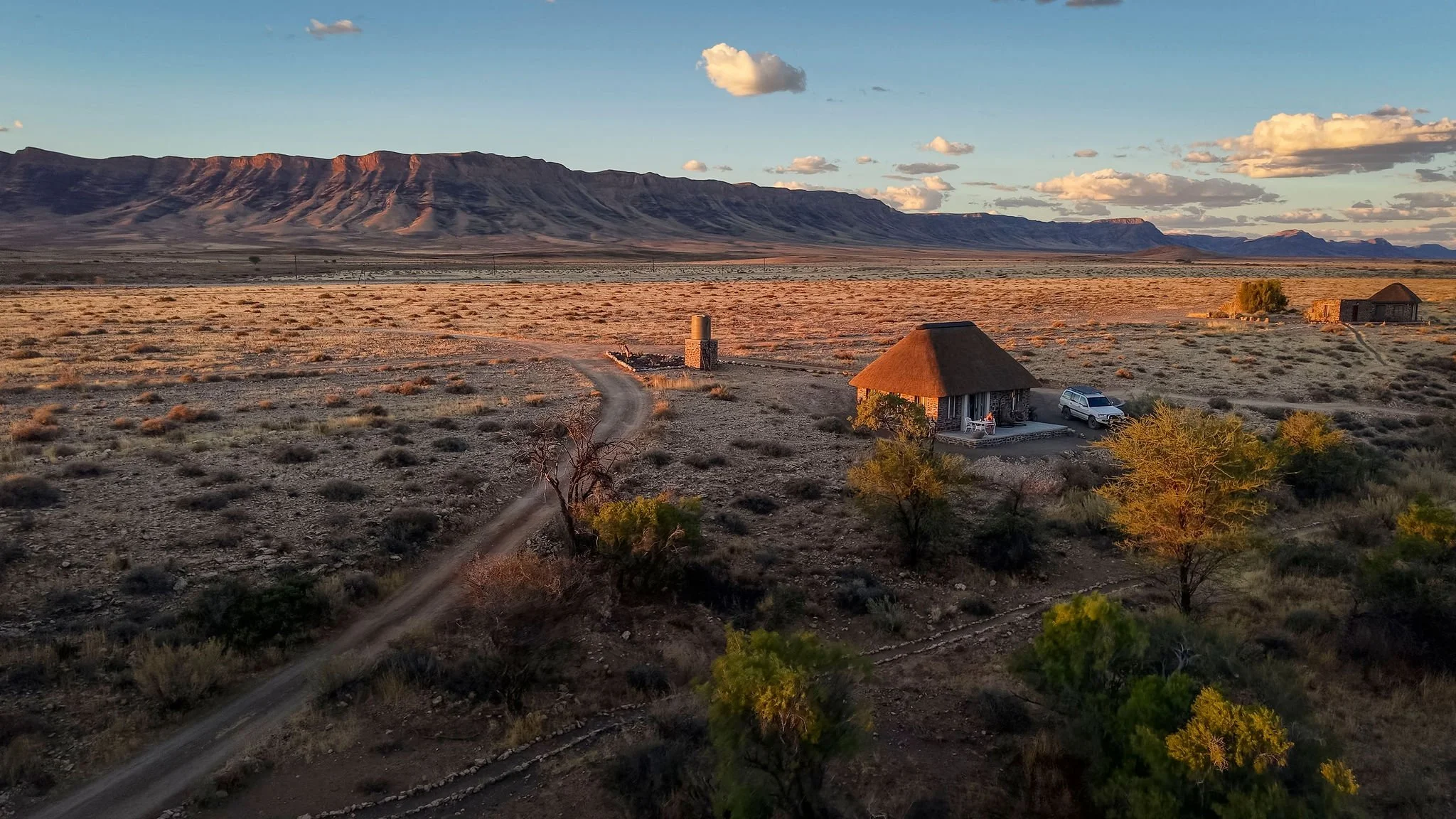
As the day progresses, the terrain grows increasingly dramatic. Escarpments begin to appear, valleys deepen, and the road steadily climbs toward Namibgrens, literally translated as “Edge of the Namib.” Perched at nearly 1,850 meters, this historic farm marks the transition between Namibia’s central highlands and the ancient desert that lies beyond.
What makes Namibgrens special isn’t luxury—it’s perspective. After days spent moving through wildlife reserves, granite mountains, river valleys, and desert landscapes, the views seem endless. The air feels cooler. The pace slows naturally. Sundowners linger a little longer, conversations drift into the evening, and the stars arrive in impossible numbers.
Tomorrow, the road drops away. Beyond Namibgrens lies one of Namibia’s great spectacles: the descent of Spreetshoogte Pass and the vast expanse of the Namib Desert beyond.
O/N Namibgrens Guest Farm & Klipspringer Villas
D10 NAMIBGRENS - NAMIB dESERT
Touring 34 mi / 55 km ✧ +670 ft / +204 m (2:15)
Passhunter 91 mi / 147 km ✧ +2214 ft / +675 m (6:15)
This morning begins with one of the great transitions of the trip. We leave the cool Khomas Highlands behind and point our wheels toward the Namib. Ahead lies Spreetshoogte Pass, a road that delivers one of the most dramatic views in Africa. Nearly 1,000 meters disappear beneath us as the plateau suddenly gives way to an ocean of desert, the horizon stretching so far it hardly seems real.
At the bottom, everything changes. The mountains recede, the road straightens, and the scale of the landscape becomes almost impossible to comprehend. We cross the Tropic of Capricorn and continue south through a world defined by light, distance, and silence.
By midday we reach Solitaire, Namibia’s most famous desert outpost. Part fuel station, part bakery, part legend, it has become a rite of passage for travelers crossing the Namib. Coffee and a slice of its celebrated apple pie are practically mandatory.
From there, the desert deepens. The Naukluft Mountains rise from the plains, mirages shimmer on the horizon, and the road pulls us ever closer to the heart of the Namib.
Desert Hills Lodge-Trip 1
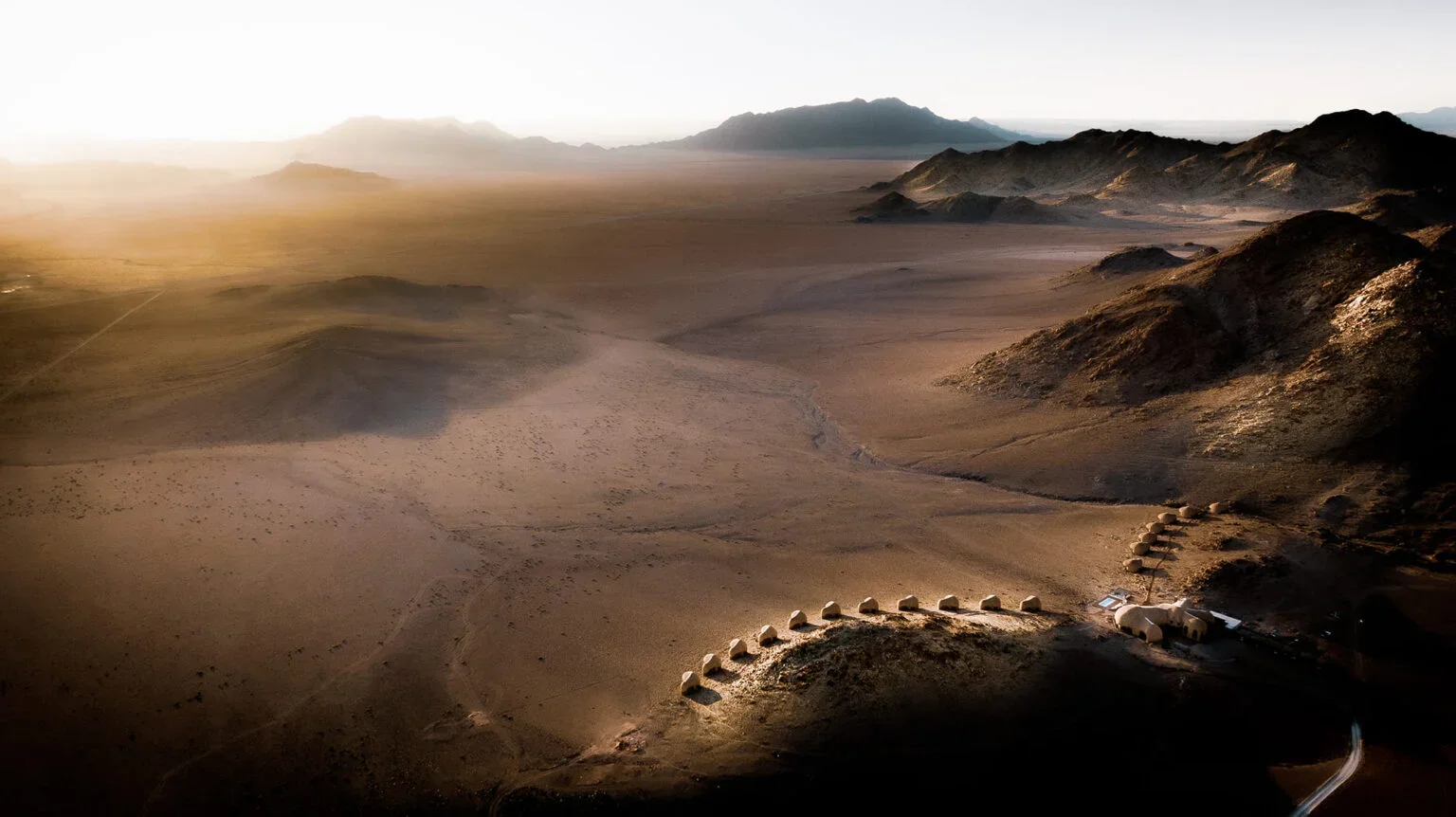
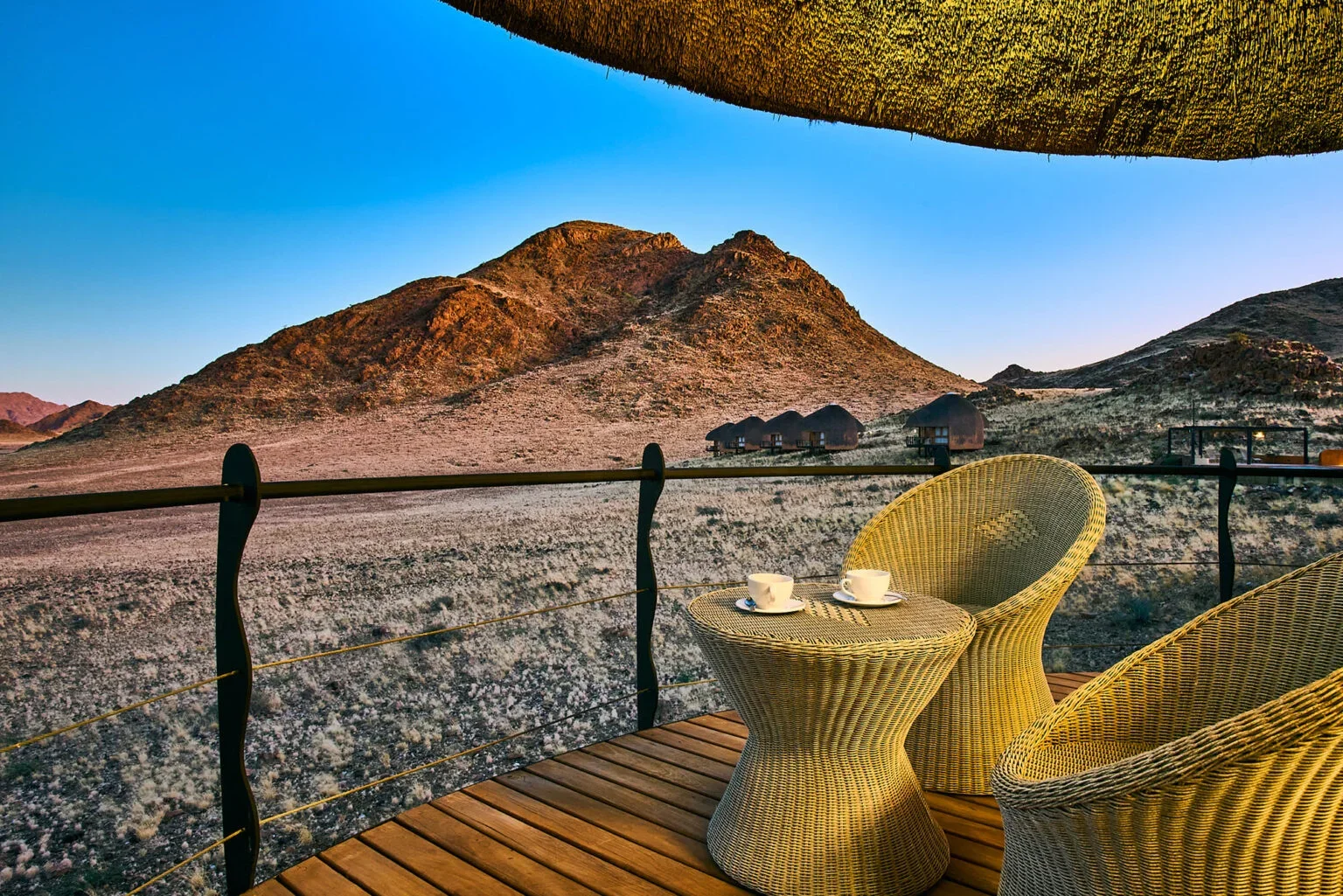
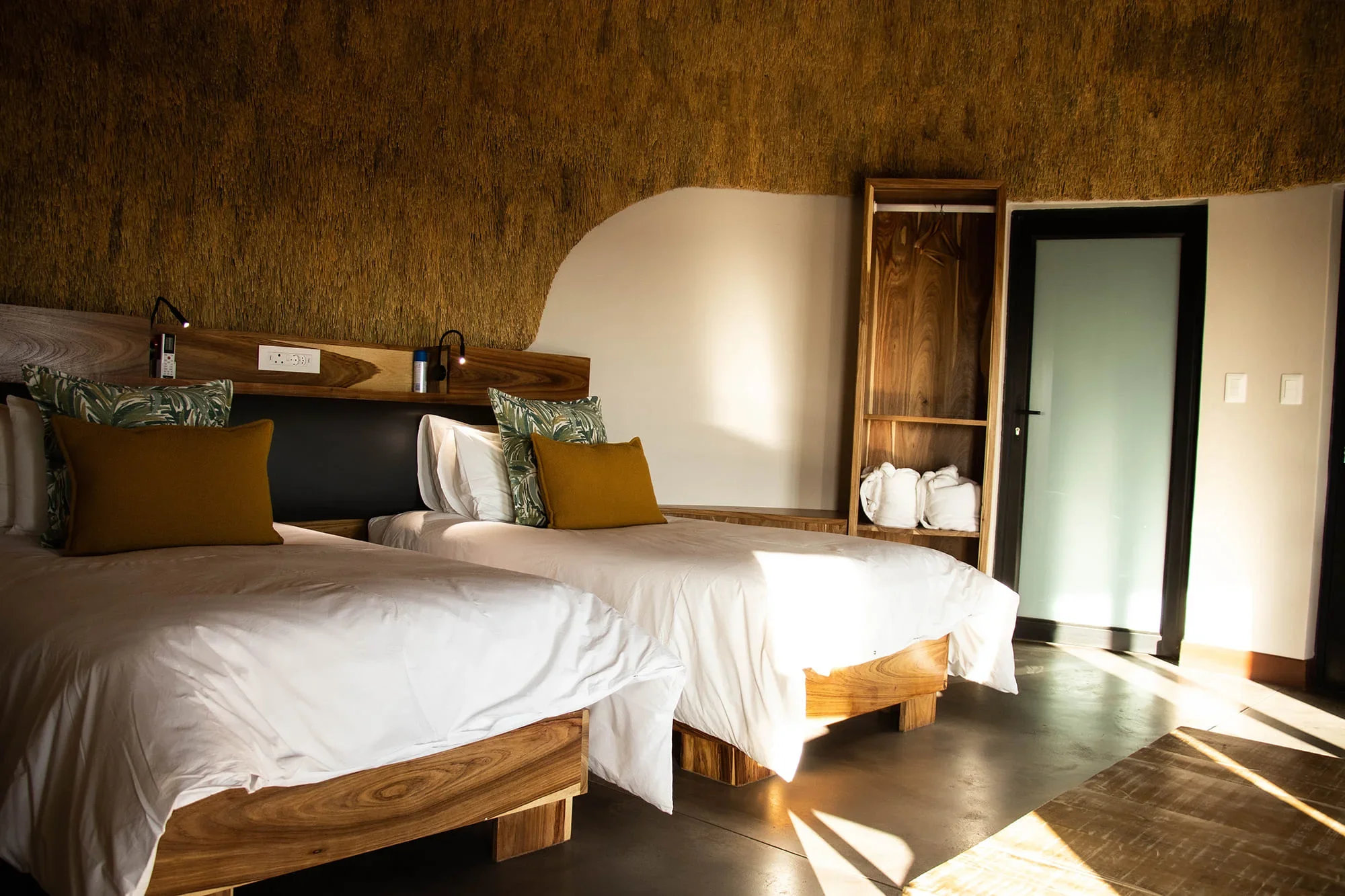
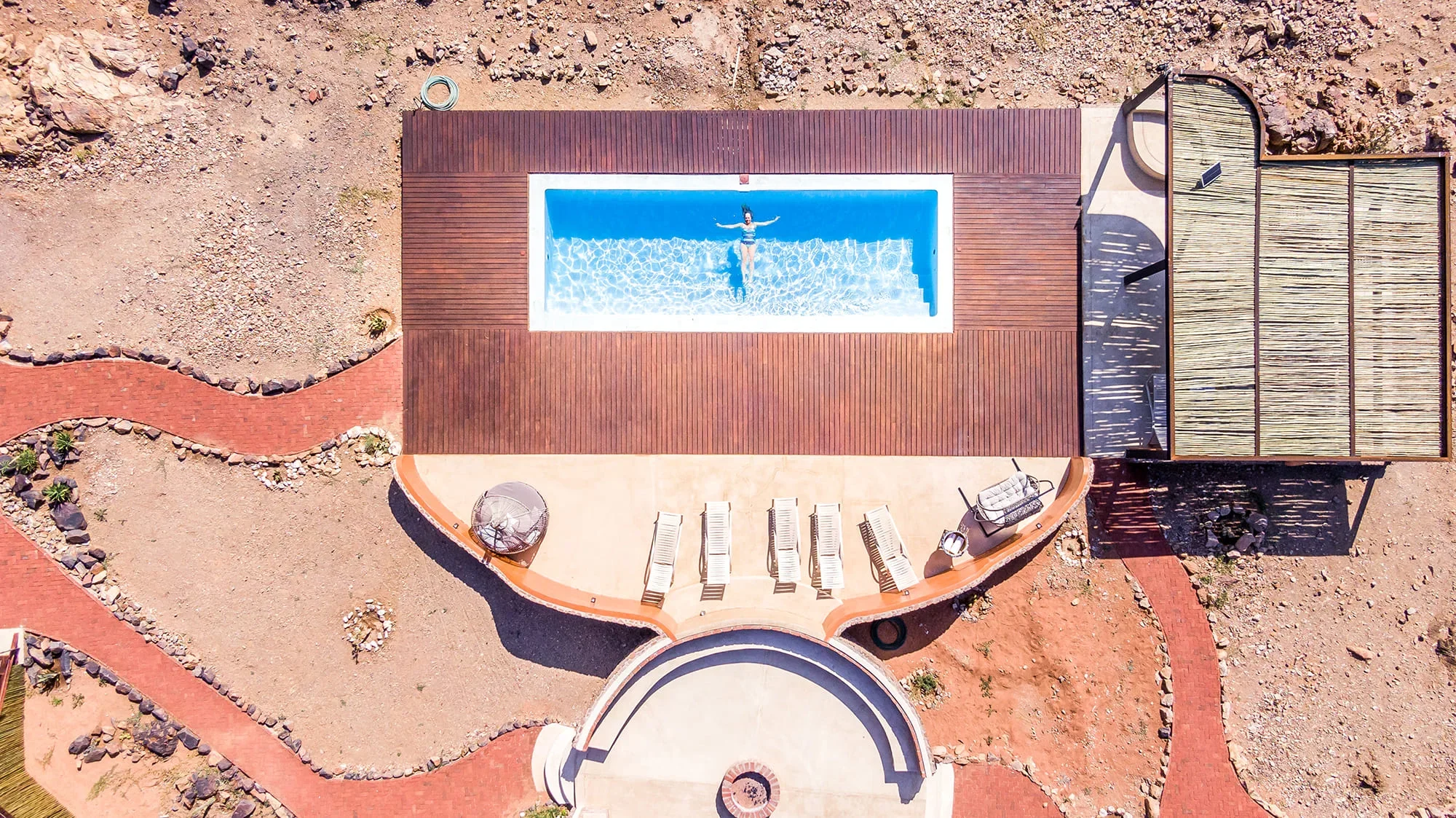
Perched above the vast Namib Desert, Desert Hills Lodge delivers sweeping views, unforgettable sunsets, and a true sense of wilderness. It's the perfect place to relax after a day of adventure, surrounded by one of the most dramatic landscapes on Earth.
Desert Homestead- Trip 2
Set amongst the open plains of the Namib, Desert Homestead offers a warm and authentic desert experience. With endless horizons, quiet evenings, and star-filled skies, it captures the timeless beauty that makes Namibia so extraordinary.
For many riders, this is the day the desert finally reveals itself—not as a landscape to pass through, but as a place to simply stand still and absorb.
O/N Desert Hills Lodge & Desert Homestead
D11 - SOSSUSVLEI
Touring 59 mi / 95 km ✧ +925 ft / +282 m (4:00)
+2.5-3hrs of desert-Sand Hiking
A Day of Sand — Sossusvlei
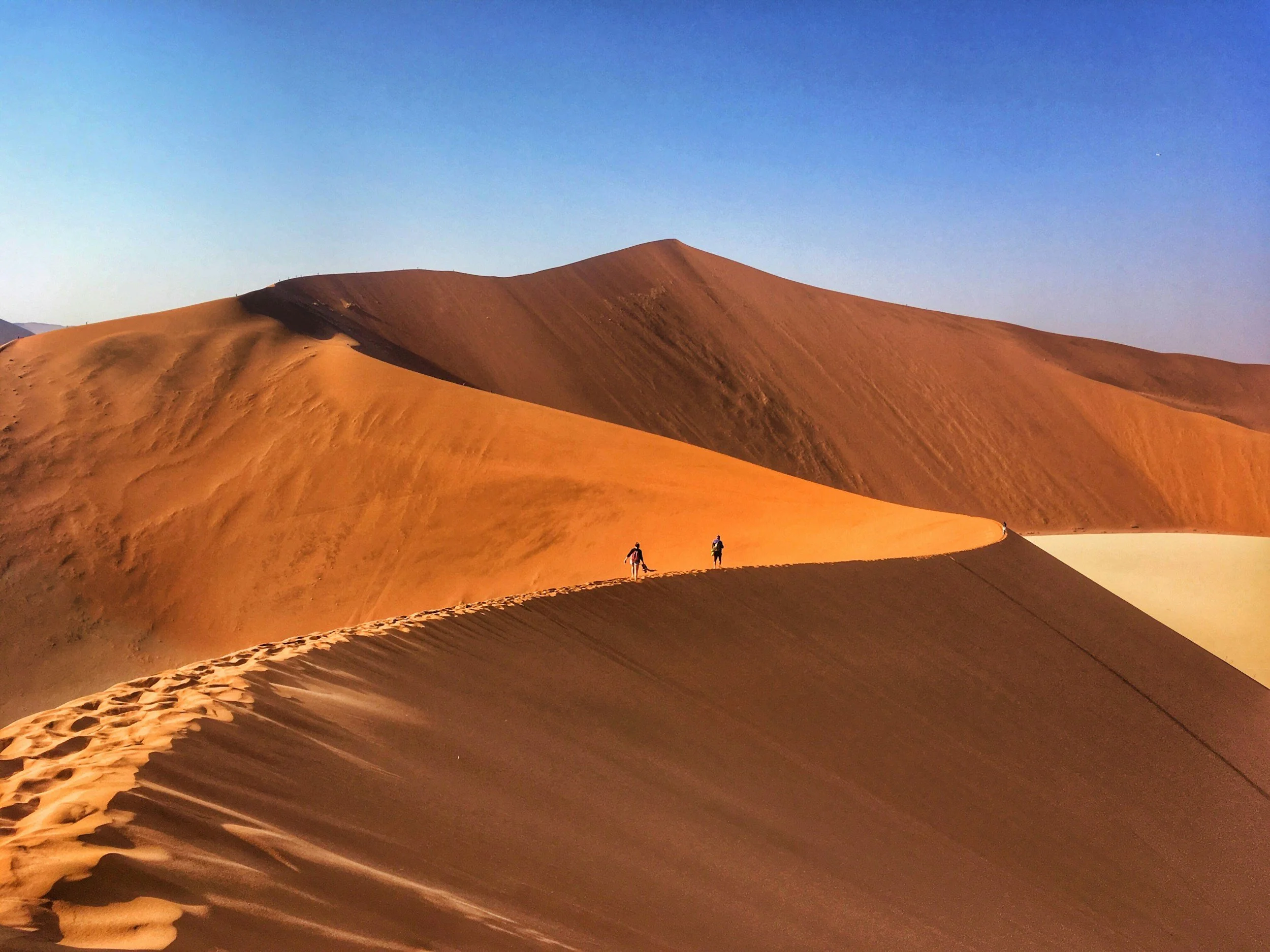
We’re up before the sun. Coffee. A light bite. Then we roll, wheels humming quietly through the darkness as we enter the Namib Sand Sea, a UNESCO World Heritage Site and one of the oldest deserts on Earth. This is the Namibia people imagine when they dream about Namibia—towering red dunes, endless horizons, and landscapes so vast they seem to distort scale itself. As first light spills across the desert, the dunes begin to glow. A ribbon of pavement pulls us deeper into the heart of Sossusvlei. The sand walls rise. The world narrows. Everything unnecessary falls away. This isn’t simply a ride into a national park. It’s a ride into one of Africa’s great natural wonders.
At road’s end, the riding stops. Cold towels. Cold drinks. Shoes off, boots on. The pace changes.
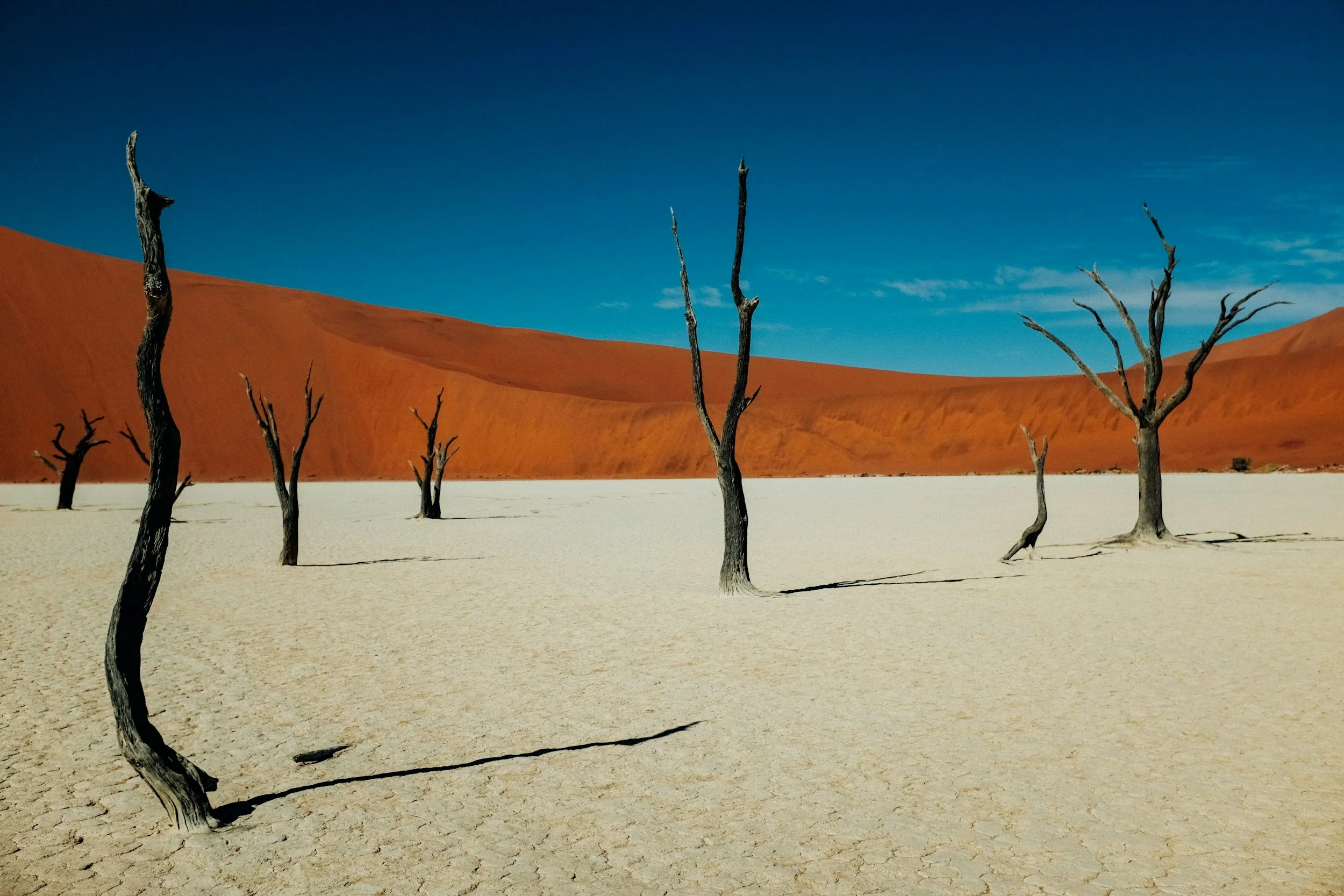
We climb Big Daddy dune—slow, deliberate steps into ancient sand. Every foot sinks. Every breath is earned. From the summit: dunes to the horizon. Wind. Light. Space. Then the drop—running, sliding, letting gravity take over—straight into Deadvlei. White clay. Black trees. Time standing still.
Lunch is simple. Shade, water, quiet. After, we move again—rolling through the park to Sesriem Canyon, walking the cut carved by the Tsauchab, watching for life where it hides. By late afternoon, the desert loosens its grip. We return to the lodge. Sand washes off. The day settles. Another night in the desert—stars overhead, nothing left to interrupt the quiet.
D12 NAMIB dESERT - WINDHOEK
Touring 51 mi / 82 km ✧ +2391 ft / +729 m (3:45)
Passhunter 70 mi / 112 km ✧ +3606 ft / +1099 m (5:00)
The trip is coming to a close, but Namibia isn’t finished with us yet.
Leaving the desert, we roll across the open Namib toward Bullsport, squeezing every last mile from the desert. At 42 kilometers, the routes split. The Touring group takes the direct line while the Passhunters disappear into the wild folds of the Kyffhäuser region, passing the remarkably remote Neuras Wine Estate before reconnecting via the lonely gravel of the D855.
By midday, both groups reunite at a working farm outside Bullsport. The owners are the Sauber family, German farmers whose roots in Namibia stretch back generations. In one of the stranger coincidences of the trip, they share Brad’s surname. We settle in for lunch, a shower, and one final chance to sit still before the road home begins.
The transfer to Windhoek takes less than three hours, but Namibia isn’t the kind of place that lets go easily. Along the way we stop in Klein Aub, a nearly forgotten mining settlement where Conny’s Coffee Shop continues to stubbornly exist against all odds. Solar powered, weathered, and wonderfully authentic, it’s the kind of place you don’t find anymore. We grab a coffee, stretch our legs, and take one final pause before returning to the modern world.
Before long, we’re back at The Weinberg Hotel. The bikes are dusty. The gear is worn. The stories have already started growing. Tonight, there is only one place to celebrate. Joe’s Beerhouse.
Part frontier tavern, part safari camp, part museum of African road travel. Old Land Rovers, animal horns, rusted signs, cold beer, and decades of stories hanging from every wall. It’s loud, chaotic, and exactly right.
One final meal. One final toast. Tomorrow we fly home.
But part of us will remain out there somewhere—on a gravel road disappearing into the Namib.
O/N The Weinberg Hotel, Gondwana Collection Namibia
**Several airlines offer evening departures from Windhoek to Europe. If you are considering one of these flights, please let us know and we would be happy to discuss the timing and logistics with you.
D13 - WINDHOEK - DEPARTURE DAY
Departure Day
This morning marks the end of our Namibian adventure. Transfers will be arranged from The Weinberg Hotel to Hosea Kutako International Airport according to individual flight schedules.
As you make your way home, we hope you leave with more than photographs. Namibia has a way of lingering long after you’ve gone—the vast horizons, the gravel roads, the desert silence, and the feeling of standing in places where the world still feels wild.
Thank you for joining us. Safe travels, and until the next road disappears into the horizon.